


December 17, 2025 at 10:10 a.m.
‘God is with us!’
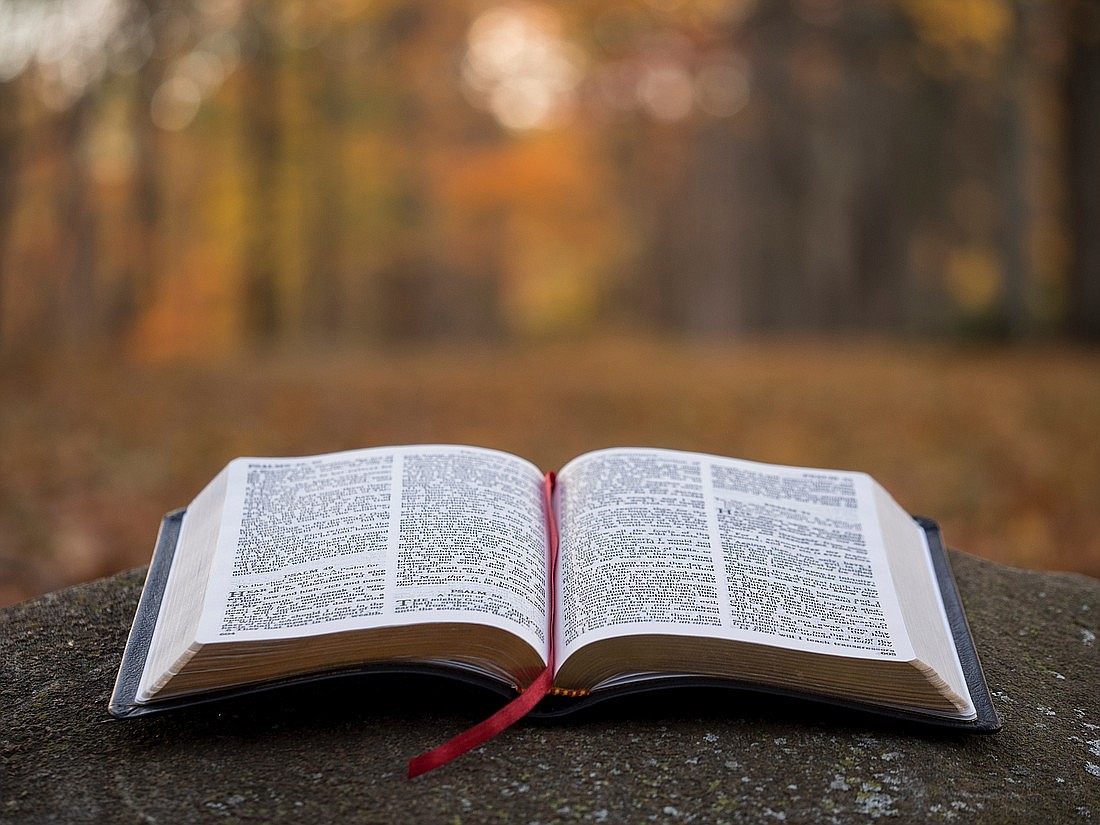
“Behold, the virgin shall be with child and bear a son, and they shall name him Emmanuel, which means ‘God is with us.’ ” — Matthew 1:23
We say the liturgical salutation and response, “The Lord be with you, and with your spirit,” so often that we forget the importance of what we are offering one another: the presence of Jesus Christ. When the Angel of the Lord came to Joseph in his Annunciation, the angel said, “Joseph, son of David, do not be afraid to take Mary your wife into your home. For it is through the Holy Spirit that this child has been conceived in her. She will bear a son, and you are to name him Jesus, because he will save his people from their sins.”
The title that the Angel of the Lord greets Joseph with reveals that God’s plan of salvation is being fulfilled, “Joseph, Son of David.” What does this title reveal to us? We need to look at the previous 17 verses of Chapter 1 of the Gospel of Matthew and in particular the opening verse of Chapter 1, “The book of the genealogy of Jesus Christ, the son of David, the son of Abraham.” (Matt. 1:1) Jesus unites us to Abraham our Father in faith and he fulfills the prophecy that the Messiah would come from the line of David. Son of David is one of the titles for the Messiah. Joseph himself identified as a son of David. “Jacob, the father of Joseph, the husband of Mary. Of her was born Jesus, who is called the Messiah.” (Matt. 1:16)
Another sign that is provided by God to help identify the Messiah comes from the Book of the Prophet Isaiah and repeated in the Gospel of Matthew: “Behold the virgin shall bear a son and they shall name him Emmanuel, which means God is with us.” (Matt. 1:21) The prophet Isaiah spoke these words to King Ahaz, “The virgin shall conceive, and bear a son, and shall name him Emmanuel.” (Isaiah 7:10-14) The prophet Isaiah promises the Lord will come to us by birth through the virgin and the Gospel of Matthew proclaims the fulfillment of the promise to Joseph in a dream; this is Joseph’s Annunciation. The Angel of the Lord speaks the words of the Prophet Isaiah to Joseph in his Annunciation, which reveals that God is with us. Joseph cooperates with the prophecy by listening to the Angel of the Lord and takes Mary into his home.
The Scriptures for the Fourth Sunday of Advent ask us to reflect on what we are doing to reveal that God is with us. The Psalm 24:1-6 and the Second Reading from St. Paul’s Letter to the Romans 1:1-7 particularly exhorts us as witnesses to the Good News of the Gospel and to reveal to all the nations how God is with us in the ordinary and extraordinary circumstances of our lives. Take for example this quote from St. Paul’s Letter to the Romans, “Through him we have received the grace of apostleship, to bring about obedience of faith, for the sake of his name, among the Gentiles, among whom are you also, who are called to belong to Jesus Christ; to all the beloved of God in Rome, called to be holy.” (Rm. 1: 5-6) As an act of faith, our share in the apostolic ministry of the Church is lived out in our lives as an annunciation of the Lord. St. Paul goes on to write in Romans 1:17, “For in it is revealed the righteousness of God from faith to faith; as it is written, the one who is righteous by faith will live.” We become witnesses to the Annunciation when we announce by faith that Jesus, the Son of David, is Emmanuel, God is with us!
In both the Annunciation to Mary, in Luke 1:30, and in the Annunciation to Joseph, from Matthew 1:20, both are addressed with the same comforting statement, “Do not be afraid.” These words remind us that we, too, should not be afraid, for “God is with us.” Let us remember that in receiving this liturgical salutation and by our announcements of that very same salutation, we offer the Lord to others: “The Lord be with you.”
We cannot offer to others what we do not have ourselves. What we offer to others is offered back to us. Let us remember the liturgical response, “And with your spirit.” When we offer the presence of God to others, the presence of God is offered to us. This presence of God is made manifest in our receiving the Holy Eucharist. As St. Augustine said, “Behold what you are to become.”
Psalm 24 from this Fourth Sunday of Advent sums it up best, “Let the Lord enter, he is the King of Glory.” The Lord’s presence in us becomes our annunciation to others, and what we are to announce is that God is with us!

- Belgian bishop says he will ‘make every effort’ to ordain married men by 2028
- Pope Leo XIV meets head of Israel’s Holocaust memorial center
- Universal health coverage is not a luxury but ‘a moral imperative,’ pope says
- ‘Venerable’ Boys Town founder Father Flanagan ‘a model of charity,’ says Omaha archbishop
- Who was Venerable Father Flanagan, Boys Town founder?
- Eastern Catholic bishops issue ‘cry for peace and justice’ as global conflicts rage
- St. Francis’ relics returned to crypt after monthlong veneration draws 370,000 pilgrims
- Report shows Cardinal Wojtyla’s actions were ‘exemplary’ in abuse cases, refuting previous claims
- Chesterton Academy students from across US make pilgrimage to Rome
- US bishops call on House to advance bill to investigate Indian boarding school legacy
Comments:
You must login to comment.