


September 30, 2026 at 10:21 a.m.
REALITY AND RENEWAL
Peace be with you.
Dear Sisters and Brothers
in Christ,
Over the past months many of you have spoken honestly with me about both the joys and the real challenges of parish life today: declining participation in some places, the strain of maintaining buildings, pressure on finances, and the deep desire to see our communities renewed in faith rather than simply maintained. I am grateful for your candor and for the dedication you continue to show in serving the people entrusted to your care.
With this letter I am formally announcing a new discipline for every parish in the Diocese of Albany: the careful, ongoing development of a individualized sustainability and growth plan to be executed over the next five years and renewed thereafter. If this sounds familiar, it is because I have spoken about it consistently since my opening press conference after the Holy Father assigned me to Albany.
I want to state very clearly: this is not about closing parishes. It is about helping our parishes become healthier, more vibrant, and truly sustainable. It is about reality and renewal, not merely survival. However, if a parish undertakes this work honestly and finds sustainability impossible even with my support and that of our diocesan team, then difficult choices will have to be made.
Sustainability will look different in every parish. There is no rigid or cookie-cutter diocesan template. The plan for Blessed Sacrament Parish in Albany will look very different from the plan for Our Lady of Hope in Copake Falls. Even two churches in the same network sharing the same pastor may emphasize different priorities. Every parish is different; demographics, finances, buildings, and pastoral realities vary widely. Therefore each parish must prayerfully assess its own situation and develop a plan that is both realistic and sustainable for the years ahead. All available options should be considered: mergers, shared resources within a network, additional clergy, repurposing or selling assets, partnerships with local entities, changing the Mass schedule, reforming the current network, etc.
In general, these are the basic areas every parish holds in common and must address thoughtfully:
Availability of the Sacraments
Every territory in the Diocese is assigned to a parish. Catholics within those boundaries have a right to the Sacraments when properly prepared and in good standing. Some churches also carry particular missions (for example, serving an ethnic community). A sustainable parish must be able to provide the Sacraments to those it is bound to serve. The American custom of parish registration, while not required by canon law, should be respected. Parishes attract others through their spirit and welcome, never by “poaching.”
Liturgical Character
We have a wide variety of liturgical styles in Albany. None is preferred by me over another, provided they remain within the liturgical law of the Church. What matters is that the liturgy reflects the desires of the people of the territory and fosters holiness: reverence for the Eucharist, appropriate music and homilies, and active participation by the laity. Examine your liturgies not to criticize but to build an even more faithful community. The Liturgy Office under Msgr. Anthony Barratt will be available for consultation.
Community Building
A parish is a community of persons under the guidance of a pastor or officially named leader — not the building, but the People of God. What does your parish do beyond the Sacraments to nourish faith and fellowship? Regular or annual events? Charitable activities that unite people? Organizations with which the parish is associated? Is the community healthy, and what would make it healthier? What traditional activities could usefully be revived? Which have passed their usefulness and now drain rather than build the parish? What new initiatives could bring fresh energy?
Evangelization and Faith Formation
What does your parish do to attract and form new disciples? Who lives in the neighborhood now, and how do you reach them? Is the parish still oriented primarily toward a past community to the exclusion of those who live there today? Do parishioners know how to evangelize? Plans must clearly address the mission of evangelization, including strong efforts in:
• OCIA and welcoming new Catholics
• Vocations awareness and encouragement
• Faith formation for children and youth
• Ongoing adult formation and discipleship
The goal is to form missionary disciples, not merely maintain programs or parishioners.
Most parishes have sacramental preparation. Fewer offer robust adult, young-adult, or small-group formation. Programs such as ChristLife and similar initiatives often prove especially fruitful. What currently works? What more could be done with realistic resources?
Affording a Priest
Not every parish needs a resident pastor; Albany has a long and often effective tradition of lay leadership. Yet every parish must be able to afford priestly ministry. A full-time priest currently costs approximately $80,000 per year in salary and benefits. These costs can be split between parishes. I have already shown that we can bring in carefully vetted priests from outside the Diocese for a parish that needs and can afford one. Each July, the Diocese moves priests to fill gaps and to send them to meet the most critical needs. If a priest is your greatest need, or the key to growth, include the ability to cover this cost in your plan. In addition, the Diocese needs more churches that can afford a Parochial Vicar so that we can properly assign our newly ordained or acquired priests. This would allow other priests, who can no longer be pastors for a variety of reasons, to be assigned elsewhere.
Appropriate Staffing
What can the parish afford? Which positions should be prioritized? Is the parish over or understaffed relative to its financial reality? Looking five years ahead, what ideal staffing would increase sustainability (music, faith formation, pastoral associate, etc.)?
Capital Plan and Buildings
Develop a realistic outlook of major capital needs and a timetable, then begin by focusing on the next five years. We must look honestly at our buildings and properties. Is each asset still serving the parish’s mission as originally intended, or could repurposing, shared use, or other arrangements better sustain the mission while reducing burdens?
Charity/Outreach
Every parish should maintain outreach to the poor and marginalized — locally or elsewhere in the Diocese. Each parish has some responsibility for the Missions throughout the world as well. Identify the needs in your parish and answer the question, “Where should efforts be focused?” This is an especially important area for inviting non-Catholics and non-active Catholics to participate
Financial Sustainability — Balanced Budget and Stewardship
The financial landscape has changed dramatically. Relying principally on the collection basket is no longer sufficient. Every parish needs reliable electronic/recurring giving. We are studying platforms (Flocknote, E-Catholic, and options through bulletin companies) and will offer recommendations; we will not mandate a single provider. Parishes cannot rely on savings accounts or leases to cover operating expenses year after year. Savings may help with transition, but they are not a long-term strategy. Plans must be realistic and sustainable. Each parish must have a concrete path to a balanced budget that includes participation in the Diocesan Appeal (accounting realistically for shortfalls when necessary). We are one Church with a singular mission supported locally, regionally, and worldwide.
Collaboration
In many situations, collaboration with neighboring parishes or within the network offers the most sustainable path. Most of our parishes are in a network with a shared pastor. These relationships are critically important but they are not set in stone. Shared ministry, staff, outreach, and resources should be seriously considered rather than attempting to carry every responsibility alone. The appropriate number of Masses within a Network and commuting area based on the number of attending Catholics should also be carefully considered among the parishes.
If You Have a School
Parishes with schools are both blessed and burdened. For this discipline, focus on the relationship between school and parish and how that relationship can remain healthy into the future. Schools themselves will need their own sustainability work. The Diocesan Schools Office will continue to assist and must be contacted when considering major change.
Timetable and Process
Beginning this Fall, each parish must meet as councils, trustees, and staff (beginning with the pastor/ PLC) to assist in creating or advancing the sustainability and growth plan. Use the areas above: summarize the current status of each, then project a realistic five-year path for sustainability for each and in at least four of the areas a plan for growth.
By the first day of Spring, March 20, 2027, submit to my office via the form that will be sent to you, either:
1. a completed plan,
2. a clear update on progress and remaining work,
3. request for help (sending nothing will be interpreted as a request for help)
I will review finished plans with the Diocesan Pastoral Council. Those that are sound will receive my thanks and a green light. Incomplete plans will receive specific feedback. If little or no work has begun, I or others from the Pastoral Center will come to the parish to meet with the pastor and councils.
As the process continues, pastors need to invite more and more parishioners to be involved so that no interested parishioner is surprised by significant change.
I recognize that this kind of honest reflection is not always easy. Yet I am convinced that facing these questions prayerfully will ultimately strengthen the Church we love. Our people deserve parishes that are vibrant, mission-focused, and financially responsible.
You are not alone. Our team stands ready to support you. Thank you for your faithful ministry and for your willingness to lead with courage, hope, and trust in the Lord.
With gratitude and prayer,

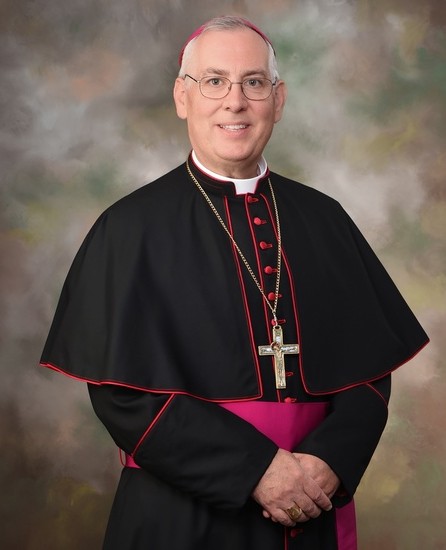
Most Rev. Mark O’Connell
Bishop of Albany
- Haitian Catholics in Philly mark 50 years of faith, despite immigration crackdown
- Archbishop ‘grateful, honored’ Indianapolis chosen to host 2029 National Eucharistic Congress
- UPDATE: Pope Leo needs ‘no further treatment’ following lung cancer surgery
- Georgia Martyrs’ beatification the next big event for US Church
- Catholic groups raise alarm about DOJ guidance on institutionalizing persons with disabilities
- Analysis: As US bishops’ ‘Economic Justice for All’ turns 40, is a new update urgent?
- Beneath our division lies a crisis of dehumanization
- Irish synod marks ‘end of an era’ with national gathering
- Former premier who led Quebec when province OK’d ‘assistance in dying’ now questions its expansion
- Protecting marriage more urgent than ever, pope says after surgery
Comments:
You must login to comment.