


September 23, 2026 at 10:20 a.m.
A matter of yes and no, but not maybe!
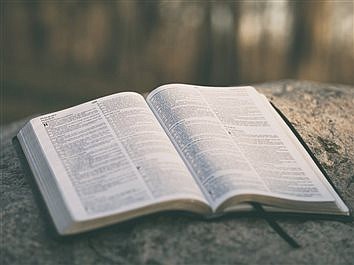
When John came to you in the way of righteousness, you did not believe him; but tax collectors and prostitutes did. Yet even when you saw that, you did not later change your minds and believe him. — Matthew 28:32
With our Scripture readings and reflection for this weekend, we continue to work our way through Jesus’ many parables found in St. Matthew’s Gospel. Last week, our parable was about the landowner calling workers into his vineyard at various times of the day. We noted that it is a rather puzzling parable, and so perhaps the parable this week is a bit easier. It is about a rather familiar situation that we have all experienced … someone (perhaps us) says yes to a request or instruction but then doesn’t follow through, or says no but then goes ahead and completes the request or task. Again, we have all been there with both scenarios!
As with any parable, the crucial matter is to understand the message and the teaching behind it. To do this in the case of our parable this weekend, we first need to look at the context of our Lord’s words; that is, why did Jesus present this parable? The religious leaders had been challenging Jesus’ authority. They had also been very critical of him, especially regarding his association with the “wrong sort” of people (tax collectors, sinners, etc.). On one level, therefore, perhaps Jesus is reminding them that God’s love and mercy are offered to all. The issue is whether we truly accept and say yes to this, or not. Many of the religious leaders had said yes but, in reality, did not accept this love and mercy. Nor did they put into practice their yes to God; that is to be active co-workers in God’s vineyard. Their attitude and lifestyle simply did not follow through. Sinners, on the other hand, had, at first, said no to God, but then they had experienced a change of heart and said yes. They became God’s co-workers. Their whole way of life had changed to a resounding yes to God! Instead of going against God’s will, they now do God’s will. Incidentally, this is why we have our Lord’s warning to the religious leaders at the end of the Gospel.
The Scriptures are full of examples of those who, at first, had said no to God, but then had changed their minds. We can think of characters such as Zacchaeus or Matthew (our Gospel writer for this week!) or the Repentant Thief. The same is true for many of our saints such as St. Augustine or St. Ignatius of Loyola. With God’s help, they all “changed their mind.” It is worth recalling that the special word used in the Scriptures to denote this change of mind and complete transformation of life is “metanoia.” What is more, this change is total and permanent. It involves a completely new disposition and way of life. In other words, it is a complete yes. It changes who we are and what we do.
As always, we must ask, where does the parable leave us? We are probably a mix of both the sons mentioned in the Gospel. We may, in a fit of enthusiasm, say yes to God in some way, or perhaps make some sort of promise, often when we are facing some sort of trial, or when we really want some outcome to a situation. The same can be true in the season of Lent, when we decide on what we are going to do. We might decide to give up something, or to volunteer, or to pray more, or to try to resolve a long-lasting family quarrel. Unfortunately, other things crowd in, or we realize that we have taken on more than we can handle. Our yes becomes a no.
Thanks be to God, all is not lost. With God’s help, we can still turn that no back into a yes. The sacraments certainly are a great help in this further change of mind, or metanoia. We can make use of the Sacrament of Reconciliation to be healed and, once more, to realign our will with what God asks of us. We are fed by the Eucharist to give us strength to follow God’s will and to say yes to Him. It is our daily bread, enabling us to love and to serve the Lord. Prayer is also a great help. In prayer, we might reflect on those things that drive us to say no to God. What is more, in saying no to certain habits or actions, we are actually then saying yes to God! The list of such matters is endless.
How often do we pray the “Our Father” each day? Many times, for sure. A great exercise is to pause at the words “thy will be done” and make sure that we mean what we say!
- Trump revives baseless claims about Haitian migrants in Ohio while touting deportations
- US bishops, lawmakers offer prayers for Pope Leo after cancer diagnosis
- Pope Leo XIV’s surgery reveals lung cancer
- What’s a lung nodule? As Pope Leo undergoes surgery, medical experts explain
- Prayers for pope ahead of surgery invoke Our Lady of Fatima on miracle of sun anniversary
- Pope Leo XIV admitted to hospital for afternoon lung surgery
- Beyond the celebration: Quinceañera formation nurtures faith and belonging
- Texas priest named Maronite bishop of eparchy in Mexico
- Archbishop Broglio denounces ‘public spectacle’ of Hasan execution, obliges Catholic recusal
- Washington Letter: Pentagon plan to livestream execution met with widespread condemnation
Comments:
You must login to comment.