


September 16, 2026 at 11:06 a.m.
The grace that leads us home
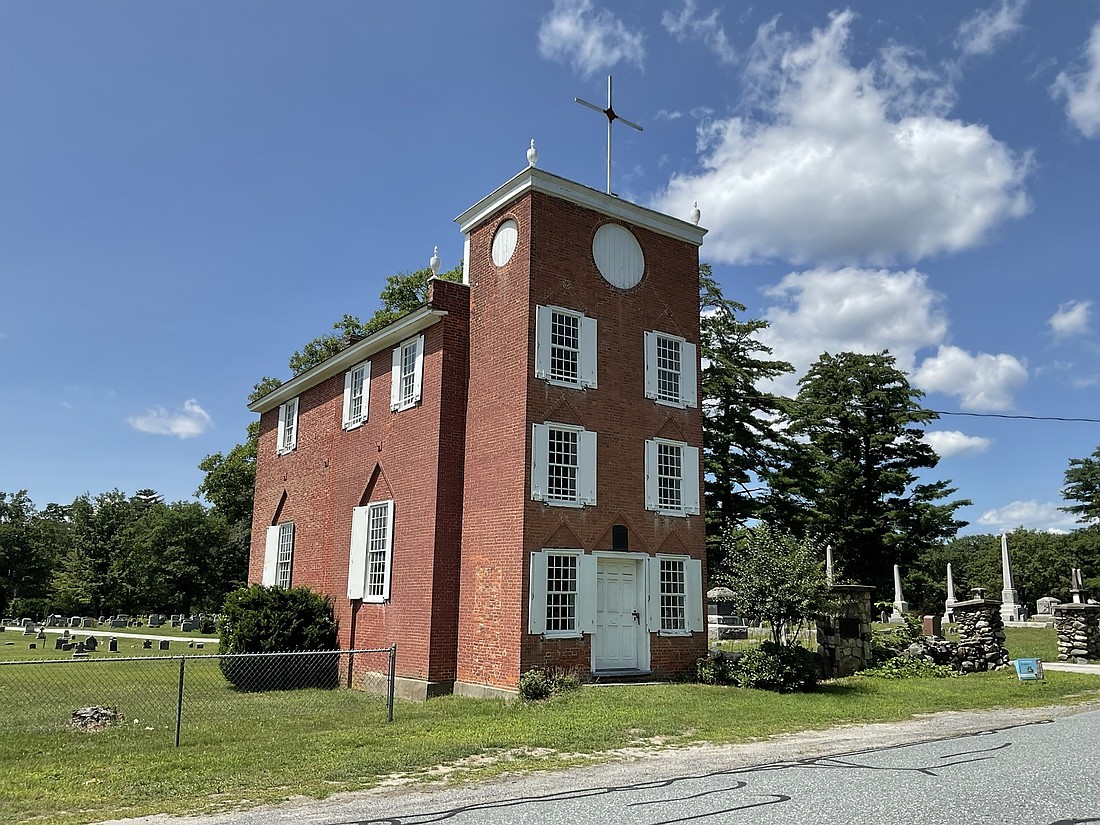
A few years ago, feeling nostalgic, I visited St. Joseph’s Church in rural West Chazy — the parish where I was baptized. It is a short drive from my childhood home. As I sat in the sanctuary of my patron saint, picturing my family gathered around the font decades ago, I realized I had taken the grace of my baptism for granted. Only recently, after a wrong turn led me to a small-town church in New Hampshire, did I come to understand the richness of my Catholic heritage.
What caught my attention was a state historical marker designating the site of “the first Roman Catholic edifice in New Hampshire”— a stately 1823 brick structure erected by a former Episcopal minister named Virgil Horace Barber. Born into a prominent New England Protestant family, Barber was an influential clergyman in an intensely anti-Catholic era. Yet, in 1814, divine grace interrupted his comfortable life.
For Barber, it was the question of apostolic authority that led to a rigorous study of Catholic doctrine. He sought counsel from Bishop John Cheverus of Boston and was deeply moved after discovering a St. Francis Xavier novena that belonged to an Irish servant girl in his home. His intellectual pride gave way to surrender, and in 1816, he formally entered the Catholic Church in New York City.
What followed was remarkable. Barber’s conversion quickly led his father, wife and five children into the Catholic Church. Though the exact number is unknown, as many as 20 others outside the family also converted within the next few years. With the Church’s permission, Virgil and his wife ultimately separated so he could become a Jesuit priest, taking the title Reverend Barber, SJ, and she joined the Visitation Order to become a nun. All five of their children later entered religious life.
As I stood before the former Catholic church and school — the fruit of Barber’s conversion — I considered the “call to conversion” in the Holy Rosary’s third Luminous Mystery. This marked the beginning of Jesus’ ministry of mercy, calling believers to turn away from sin and transform their hearts. Specifically, He was offering humanity a pathway out of sin through the grace of conversion.
I could see a connection between the grace of my early baptism, the dramatic grace of Barber’s adult conversion, and the conversions happening in our modern world. In a culture filled with noise, constant connectivity and secular distractions, the decision by individuals to seek God today is just as remarkable as my own infant baptism or the awakening of the former Protestant minister two centuries ago.
When someone decides to seek the truth today, it begins with a quiet stirring in the soul. The Holy Spirit, our promised Advocate, senses a small, receptive spot in a warming heart where Jesus’ teachings can take root. In our parishes, this receptiveness to the Holy Spirit takes tangible form in the Order of Christian Initiation of Adults (OCIA). Whether unbaptized catechumens preparing for the full Easter sacraments or baptized candidates making their profession of faith, cradle Catholics rarely see the courage of this commitment. For nearly a year, these individuals meet weekly, learning the foundational doctrines, rich traditions and moral teachings of the Catholic faith. Initially, a candidate meets with parish members and clergy in an informal setting to ask questions, share doubts and voice desires. In these quiet rooms, far removed from the noise of the modern world, the same miracle of conversion that captivated Barber comes alive once again.
In an era when convenience is worshipped, these seekers make a counter-cultural commitment. Like Barber, they are not searching for an easier path or a social gathering. Instead, they grapple with profound questions of truth and are willing to set aside misconceptions in their pursuit of a better life, anchored in the One who declared, “I am the way, and the truth and the life” (John 14:6).
The planned trip to West Chazy, along with my unexpected discovery in West Claremont, helped me realize that the journey of conversion is a tremendous grace. Whether through a quiet baptism as an infant or the kindled spirit of an adult in a local parish meeting room, the call of the Luminous Mystery remains unchanged. We are all invited to step out of the noise, answer the Advocate’s call and allow the grace of conversion to lead us home.
Mike Langlois is the Faith Formation Director for St. Augustine Knights of Columbus Council 7273 in Peru. He is also the Upstate Conference Coordinator for Evangelization and Faith Formation for the New York State Knights of Columbus, which encompasses the Buffalo, Rochester, Syracuse, and Ogdensburg dioceses. Local Knights of Columbus councils interested in fortifying the faith of their memberships, or offering column topic ideas, can contact him at [email protected].
- Pope Leo declares death penalty ‘inadmissible’ attack on dignity of human person
- Novena, resources respond to ‘urgent pastoral challenge’ of mental health
- Pope Leo names Archbishop Viola new archpriest of St. Peter’s Basilica
- Everything ‘begins with God’ for first Black woman to be president of Denver’s Regis University
- Keeping the faith when dealing with mental illness
- Mike Ditka dies at 86: A life of football, fire, and Catholic faith
- Catholicism comes to the Pacific Northwest and Northern Rockies
- Traveling ‘Immigrant Crosses’ memorial of ICE-involved deaths launches in Illinois
- Bishops discuss cohabitation of young couples at Vatican meeting on marriage and family
- FOCUS names Jonathan Reyes as CEO
Comments:
You must login to comment.