


September 16, 2026 at 10:41 a.m.
CATECHETICAL SUNDAY 2026
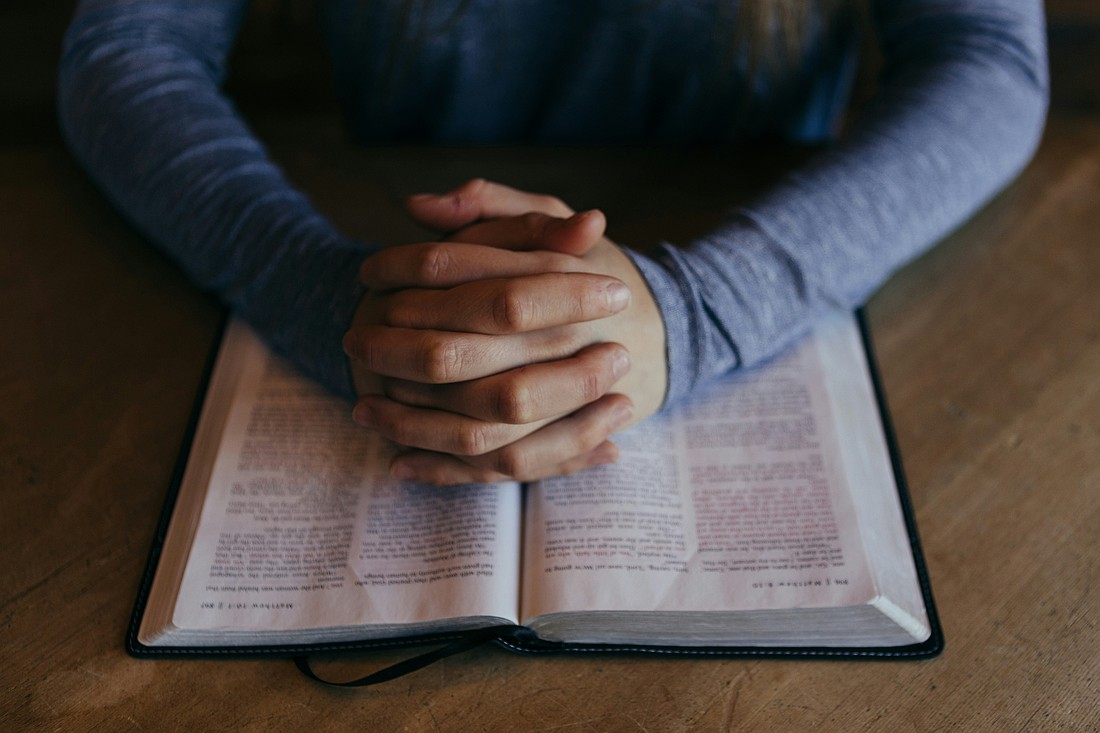
“The Spirit of the Lord is upon me … to bring good news to the poor.”
Chapter 4, verses 16-21 of Luke’s Gospel from which this quote is taken, has often been called Jesus’ inaugural address. Here in the United States of America, we are quite familiar with inaugural addresses. Most notably, we hear one every four years from the newly elected president. Historians of the presidency aside, I would wager that many of us cannot recall a single thing about the inaugural addresses we have heard or read about in our lifetime. However, there are exceptions, such as President John F. Kennedy’s famous line: “Ask not what your country can do for you — ask what you can do for your country.”
CATECHETICAL SUNDAY 2026
Catechetical Sunday is a wonderful opportunity to reflect on the role that each person plays, by virtue of baptism, in handing on the faith and being a witness to the Gospel. This year, the Church will celebrate Catechetical Sunday on Sept. 20, and the theme is “The Spirit of the Lord is upon me … to bring good news to the poor” (Luke 4:18). The 2026 theme reveals Jesus’ mission and identity. Anointed by the Holy Spirit, he is sent to bring hope, healing and freedom — especially to the poor, the brokenhearted and the forgotten. This passage shows that the Messiah comes not with power or status, but with compassion, restoring dignity and proclaiming God’s mercy. It also becomes a model for the Church and us, as we are called to continue Christ’s work by sharing the good news and caring for those most in need.
Those who the parish community has designated to serve as catechists will be called forth to be commissioned for their ministry. Catechetical Sunday is an opportunity for all to rededicate themselves to this mission as a community of faith.
Why do we celebrate Catechetical Sunday?
In 1935, the Vatican published “On the Better Care and Promotion of Catechetical Education,” a document that asks every country to acknowledge the importance of the Church’s teaching ministry and to honor those who serve the Christian community as catechists. For the first few years after Catechetical Sunday was established, national catechetical congresses were held in conjunction with the celebration. Beginning in 1971, the USCCB’s Department of Education began producing materials to help parishes celebrate the event at the local level. When the Committee on Catechesis, now named the Committee of Evangelization and Catechesis, was named by the conference as a standing committee, it continued to publish Catechetical Sunday materials each year. The United States Conference of Catholic Bishops has designated the third Sunday in September as Catechetical Sunday.
What does ‘catechetical’ mean?
The word might be more familiar than you think. Many Catholics have used the word “catechism” for years, and they know it has something to do with the compendium of the Church’s teachings. The root word, “catechesis,” is from a Greek word meaning “to echo or resound.” Catechesis is the act of resounding or bringing the Church’s teachings to the world. A catechist is one who teaches in the name of the Church.
Why do we have a special day to commission
catechists?
Catechesis is a distinct and special ministry in the Church. As the Catechism of the Catholic Church makes clear, “Catechesis is intimately bound up with the whole of the Church’s life ... her inner growth and correspondence with God’s plan depend essentially on catechesis” (no. 7). This ministry of teaching in the name of the Church has a profound dignity, which is why catechists are formally commissioned by the Church. It is only fitting that we set aside a day to highlight this ministry and invite the entire church community to think about our responsibility to share our faith with others.
How are parents recognized on Catechetical Sunday?
Parents are truly the primary catechists of their children. They prepare the soil and plant the first seeds of faith. On Catechetical Sunday, we not only highlight the work of catechists in parishes and schools, but we also commend parents and guardians and encourage them to take seriously their role of making their Catholic households a place where faith is passed on to the next generation. This is why the rite of blessing of catechists used on Catechetical Sunday includes an optional blessing of parents and guardians. Source: USCCB.org
We are likely to remember such a line. Why? Because President Kennedy’s words were powerful. They set forth a vision. A vision that inspired people and called them to action. It was a vision filled with a sense of purpose and hope, capable of sustaining our nation for the future.
For those of us called to be catechists — and indeed for all disciples of the Lord — Jesus’ inaugural address provides us the vision and inspiration, the purpose and hope, for carrying out and sustaining our ministry as catechists and our life of discipleship. As we celebrate this Catechetical Sunday on Sept. 20, let us reflect a bit on Jesus’ powerful words.
“The Spirit of the Lord is upon me …”
We know that in baptism and confirmation, each of us has received an abundant outpouring of the Holy Spirit. Hands were laid on us, and we were anointed with Sacred Chrism. But do I really believe it? Does the presence of the Spirit of the Lord make a difference in how I live as a disciple and in how I minister as a catechist? Am I loving, joyful, peaceful, kind? Am I striving to be a good, faithful, gentle person who acknowledges my own struggles and weaknesses and asks God for the grace to grow? (cf. Galatians 5:22-23)
Moreover, do I really believe that God regards me as his beloved daughter/son? Do I believe in my heart that God has called me to the ministry of catechesis — that I am not just filling a spot because no one else stepped forward? Do I believe that through the witness of my life, and the faith that I share, I can be an instrument of the Lord’s grace in ways that I may never see come to fruition in the future?
“to bring good news to the poor”
Jesus delivers his inaugural address using the words of the Prophet Isaiah. When Isaiah shared those words, the people of Israel had returned from exile in Babylon. The land and their Temple — the dwelling place of God — were in ruins. How could they ever begin to rebuild? (Think of the images of devastation from fires and floods we have seen in recent times.) Isaiah’s words called them to renewal and transformation by reminding them that God was still near. They were still God’s chosen people.
In Jesus’ time, the people were oppressed by the rule of the Roman Empire. Many suffered from poverty, illness and exclusion from the community. Each in their own way longed for liberation and the fulfillment of God’s promises. The Gospels are filled with numerous encounters Jesus had with such people. By applying Isaiah’s words to himself, Jesus proclaimed that he is the one who brings healing and hope, forgiveness of sin, liberation from every kind of oppression, and, ultimately, freedom from even death itself! As he said to those listening, “Today this scripture passage is fulfilled in your hearing.”
Being disciples of Jesus, and in our ministry as catechists, we proclaim that this good news is not some ancient tale, but rather something that is active and alive — that continues to be fulfilled as much today as when Jesus first announced it. No matter what aspect of the faith we are sharing, this is the good news that must always be on our lips: “Jesus Christ loves you; he gave his life to save you; and now he is living at your side every day to enlighten, strengthen and free you” (Directory for Catechesis, 58).
And what of the poor to whom both Isaiah and Luke say this good news is addressed? Again, if one looks at Jesus’ ministry, certainly this message is for those who are hungry and thirsty, those lacking adequate clothing and shelter, the stranger among us, the sick and the imprisoned (cf. Matthew 25:35-40). They are to be the prime recipients of the good news, which we make visible through our generosity and our advocacy for justice on their behalf.
Yet, each one of us — and every single person we encounter — needs to hear this good news. For we all are “poor” in the manner St. Augustine described so long ago: “You have made us for yourself, O Lord, and our hearts are restless until they rest in You.”
One thinks of the story of Zaccheus, the tax collector short in stature, who climbed a tree because he wanted to see Jesus (cf. Luke 19:1-10). Despite being wealthy, something inside Zaccheus must have been poor and restless. After all, he was despised by the people for his occupation. Tax collectors were regarded as tools of the Roman Empire. Somehow, though, he sensed that Jesus might have the answer to his restlessness and poverty.
We, too, may feel this poverty more poignantly when we experience the restless moments of life — times of change, loss, illness, uncertainty and the like. If we are honest, though, much like Zaccheus, even when life is stable and full of many blessings, there is still a nagging little ache in our hearts that asks: “Is this all there is?” or “What’s it all about?”
Far from being negative, such questions reveal a “holy emptiness” — a space deep inside that only God can fill. The good news is that God is already near. Though human frailty may dim our perception from time to time, God is ever present in our hearts and lives and in those whom we catechize.
The life of a disciple — and especially the ministry of the catechist — is “to stir into flame the gift of God” (2 Timothy 1:6), first within ourselves, and then within others. We nurture our relationship with the Lord and with one another — so that the Reign of God, proclaimed by Jesus in his inaugural address, can be realized more fully here and now, until it is completed in eternity:
“The Spirit of the Lord is upon me, because he has anointed me to bring glad tidings to the poor, to proclaim liberty to captives and recovery of sight to the blind, to let the oppressed go free, and to proclaim a year acceptable to the Lord.”
Each one of us — and in fact all creation — will one day be made whole, for God will be all in all.
May the 2026-2027 catechetical year truly be one acceptable to the Lord! A year where we disciples allow Jesus’ inaugural address to deeply permeate our hearts, and where it animates our ministry as catechists — all for the greater glory of God!
David Amico is the Director of the diocesan Office for Discipleship Formation.


- At Red Mass, Archbishop Broglio urges lawmakers to ‘direct our thoughts in the ways of peace’
- In rare interviews, Alito defends court’s independence, reflects on impact of Dobbs leak
- Pope Leo opens Vatican bishops’ meeting calling attention to the ‘fragility of families’
- Australian bishop sentenced to 6.5 years in prison for abuse of Aboriginal men
- Full text: Pope Leo XIV’s opening address at ‘Amoris Laetitia’ anniversary gathering
- World Mission Sunday has ‘borne fruit in my own life,’ says Pope Leo
- Capital punishment is ambiguously inadmissible
- Remains of over 100 bodies found in dig all buried in coffins at Irish mother and baby home
- Why is St. Thérèse of Lisieux a patroness for missionaries?
- In the footsteps of history: Trekking California’s ‘El Camino Real’
Comments:
You must login to comment.