


October 21, 2026 at 10:27 a.m.
The law of love: Our greatest challenge!
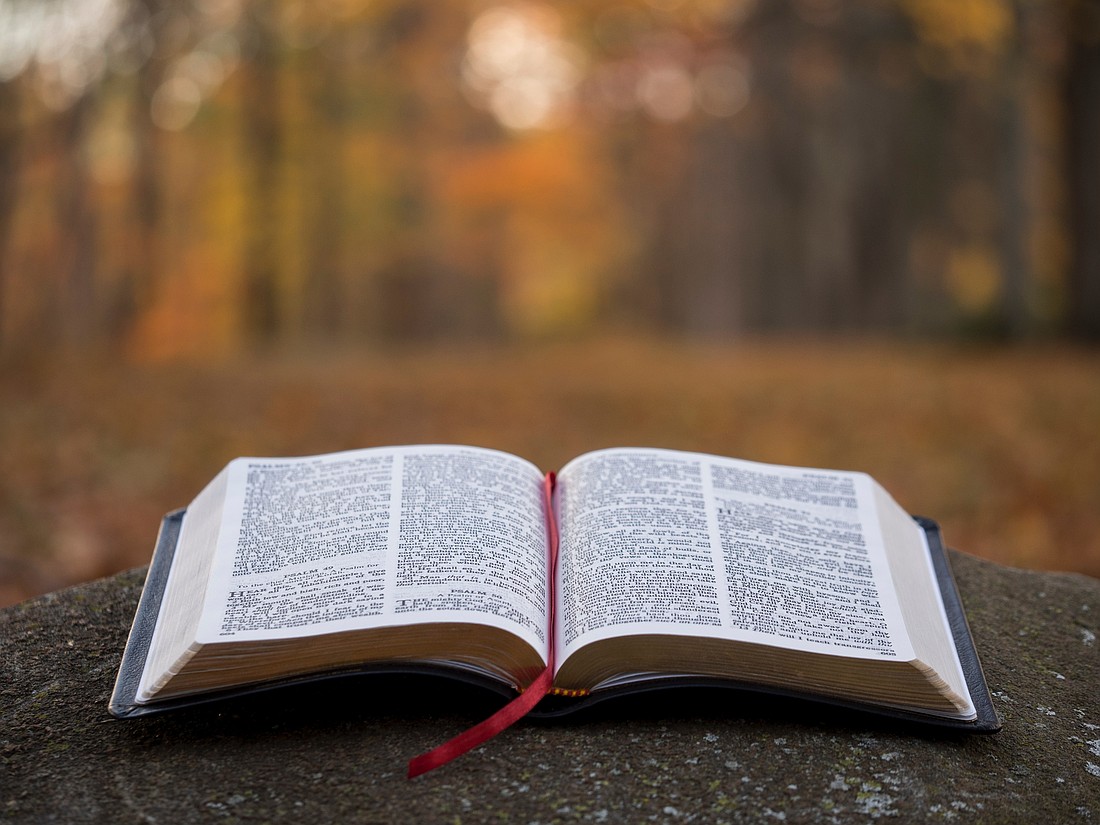
For our gospel did not come to you in word alone, but also in power and in the Holy Spirit and (with) much conviction. You know what sort of people we were (among) you for your sake. — 1 Thessalonians 1:5
In Sunday’s Gospel, Jesus stands solidly in his Jewish Tradition to answer the testing of the Pharisees. It seems like a simple question: just weigh in on which one of the 613 laws of the Torah is the greatest. Many Rabbis of Jesus’ time would have been asked this question.
With so many laws, how do you follow them? So often teachers of the law distinguished between “heavy” and “light” laws. But Jesus did not choose this approach; instead, he wisely quotes part of the Shema: “You shall love the Lord, your God, with all your heart, with all your soul and with all your mind." (Deut 6:5)
So love God with everything you are, your entire being. Jesus emphasizes that this is the greatest commandment. But he immediately adds: “The second is like it — ‘You shall love your neighbor as yourself.’ ” (Lev. 19:18)
Wham! Didn’t see that coming?! Love of God must flow immediately into love of our neighbor. Jesus reminds the Pharisees that the whole law and prophets depend on these two commandments. He doesn’t leave any wiggle room!
How do we hear the two great commandments? Are we left breathless because of the sweeping scope of Jesus’ demanding love? Or have these two commands become routine? If this is the case, then the First Reading from Exodus might shake us from our stupor.
This reading begins boldly — “Thus says the LORD,” this is the sacred name for God. Listen up! This is urgent! The people are commanded to defend the alien. The term alien refers to those who live among the people but are not their relatives; they have no blood bonds. Why does the Lord command this? It is to remind them that they were once aliens in Egypt. The people shall not wrong the widow and the orphan. These were the most vulnerable people in society.
If a woman or child had no relatives to take care of them, then they were completely helpless; they could be left without shelter or sustenance. So, it was imperative that they be protected. The needy were emphasized next. If the poor borrowed money, then they could not be charged interest. This helped lift them out of poverty. A cloak, taken as a pledge to secure a loan, could not be kept overnight because this would deprive a poor person of a blanket as well. And why are these commands given by God? Because God is compassionate — the Holy One is loving to all!
This brings us full circle — from love to love. God is the source of love, the entire universe is created in love, and we are to love as God loves, as Jesus shows us how to love.
In case we need specifics, the First Reading has great examples. We are called to reflect on our real-world attitudes and actions. What is our approach to migrants and immigrants? Have we taken time to reflect on how “alien” people are being treated in our name? Have we considered ways we might reach out to them? There are many poor and marginalized people in our society. Have we found a way to serve or to contribute to their needs?
For Jesus, love was never a Hallmark card or a warm feeling. It was, is and ever shall be engagement and compassion in deed, not in word. How are we showing our love for God and neighbor? The whole of our Christian life depends on these two commandments!
- Catholic groups raise alarm about DOJ guidance on institutionalizing persons with disabilities
- Analysis: As US bishops’ ‘Economic Justice for All’ turns 40, is a new update urgent?
- Beneath our division lies a crisis of dehumanization
- Irish synod marks ‘end of an era’ with national gathering
- Former premier who led Quebec when province OK’d ‘assistance in dying’ now questions its expansion
- Protecting marriage more urgent than ever, pope says after surgery
- Full text: Pope Leo XIV’s general audience given October 21, 2026
- AI, migration and Church renewal on bishops’ fall meeting agenda
- 2 years after the Synod on Synodality, where does the Church in the US stand?
- Centuries later, Georgia Martyrs offer fresh witness to faith, says Cardinal Leo
Comments:
You must login to comment.