


June 19, 2026 at 9:52 a.m.
‘MAGNIFICA HUMANITAS’
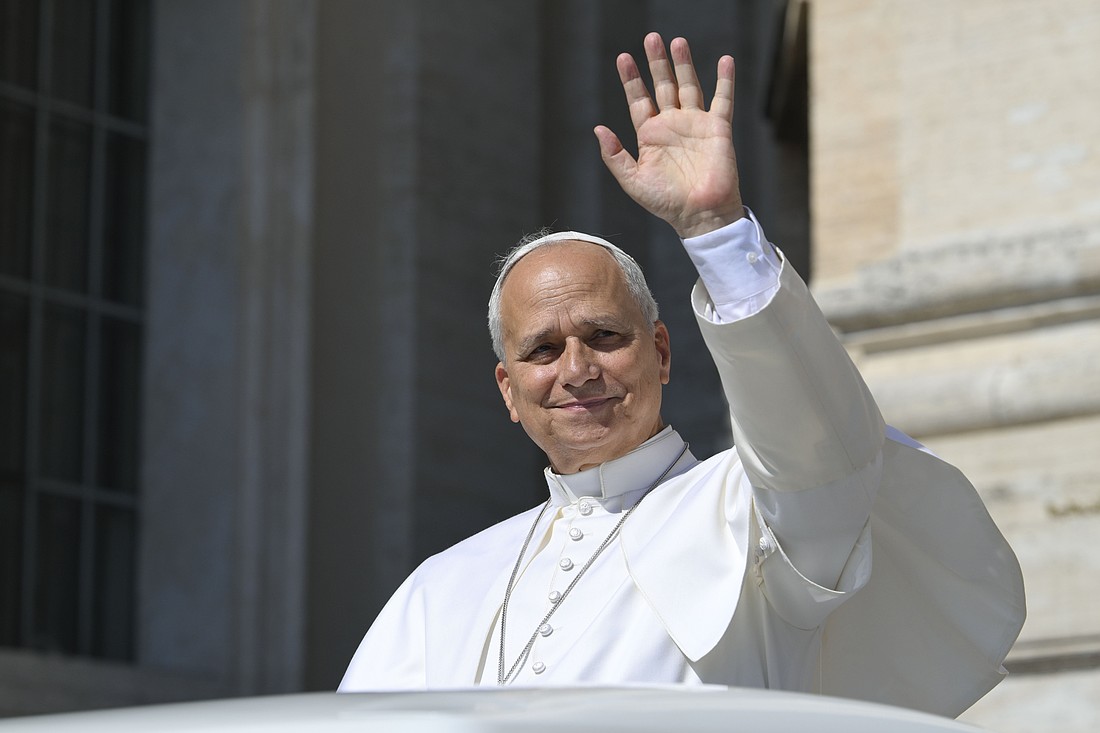
To recap the first few weeks, “Magnifica Humanitas” is Pope Leo XIV’s encyclical on the impact of artificial intelligence and emerging technologies on humanity, considered in light of the Gospel. “Magnifica Humanitas” has been out for over a month, but I am astonished to find news outlets still reflecting on it … secular news outlets. To my eyes, this phenomenon reflects the deep desire for a moral authority to point the way forward in these most consequential technologies. It reveals that, currently, there really isn’t so much a moral compass guiding the way as much as profits and ambition. The stakes are high: “since small but highly influential groups can shake information and consumption patterns, influence democratic processes and steer economic dynamics to their own advantage, undermining social justice and solidarity among persons” (108).
The issues that Pope Leo is talking about might not seem particularly relevant to you and your life. AI might even seem like something of a novelty. But I’d like to argue that these technologies can, do and will impact your lives in major ways, ways that you see and ways you might not but that you will definitely feel. For example, if you or someone you love is on some form of public assistance, many processes and even decision-making are being handled by artificial intelligence. For those who’ve had to navigate the system, one major source of frustration can come when you can’t speak to an actual person. There is comfort in feeling that decisions about your well-being and your health care are being made by a person who might look upon your situation with compassion. I believe most of us would be left a little chilled if no person was involved in such impactful decisions. In our anger we might appeal to fairness and justice, to right and wrong, or to a shared humanity and we wouldn’t be wrong to do so.
And whose sense of right and wrong? Pope Leo issues an ominous warning: “those who control AI will impose their own moral vision. … A more moral AI is not enough if that morality is determined by a few” (107). Moreover, “we cannot consider AI to be morally neutral” (104). He tells us that when AI “enters processes that affect people’s lives, it touches on rights, opportunities, status and freedom. Important and sensitive decisions — concerning employment, credit, access to public services or even a person’s reputation — risk being fully delegated to automated systems that do not know “compassion, mercy, forgiveness, and above all, the hope that people are able to change” (102).
What does Pope Leo urge the purveyors of AI to do? His language is startling. He urges them to “disarm” AI. To clarify, he says that “disarming AI means freeing it from the mentality of ‘armed’ competition, which today is not limited simply to the military context, but is also an economic and cognitive phenomenon.” In other words, we have these remarkable systems that human beings have created. But we are already experiencing human beings being hurt by them on various fronts, replacing human beings in decision making, treating people like faceless facts and figures, and, in some cases, even replacing human relationships. Pope Leo goes to say that to “disarm does not mean rejecting technology, but preventing it from dominating humanity … merely regulating it is insufficient; it must be disarmed, welcoming and accessible” (110). He tells developers that not only do they have a “particular ethical” but also a “spiritual responsibility, for every design choice reflects a vision of humanity” (111).
“The limit, the heart and the grandeur of the human person”
Deep within all of us is a fear of aging, of suffering, of illness, and of death. We express these anxieties in any number of ways, some more or less harmful than others. Some changes a person might make are cosmetic. But Pope Leo also looks at technology that tends “to foster enthusiasm for new technologies through a futuristic vision of an “enhanced human being” or “human-machine hybrid” (115). In this — in a movement known as “transhumanism” or “posthumanism” — we find “the aspiration to transcend the limits of the human condition” through “a hybridization of human beings, machines and the environment, even anticipating a threshold where humanity surpasses itself in a new evolutionary stage” (116). It can remind us of what we’ve seen in generations of science fiction, but as it becomes more of a reality, it is scary to envision something that is “guided by an outlook that devalues human limits and promises a purely technical form of ‘salvation’” (117).
At its root, however, is a fear of aging, of suffering, of illness, and of death. Though we’ve faced it throughout our existence as a species, we don’t always know what to do with our biggest fears.
So, what do we do about suffering?
Do we seek salvation in new ways of being human, to travel down new paths toward immortality, whether it’s through changing the physical experience of being human or even a form of digital immortality?
Pope Leo proposes a different path to consider … should we instead seek to learn from our suffering? If so, what can we learn from our suffering?
We can learn the lessons that only suffering brings. We can learn from the things that hurt, whether it’s patience, wisdom or grace. We can embrace our crosses as Jesus did, because it’s only in our crosses that we can find the way to Resurrection.
We can learn that we are all human, frail and finite. When we suffer we find that all have this one thing in common. It creates solidarity among us and builds understanding. We learn that, just as we don’t want to suffer, that others don’t as well. We can then learn to ease each other’s burdens. In that, we learn the way of love that Jesus taught us. Strangely enough, we then learn how to transcend our humanity by becoming more like God.
Tom Acemoglu is Pastoral Associate for Evangelization and Catechesis at St. Ambrose Church in Latham. He has 25 years of experience in parish ministry and has worked in the church for 18 years.

- Pope Leo declares death penalty ‘inadmissible’ attack on dignity of human person
- Novena, resources respond to ‘urgent pastoral challenge’ of mental health
- Pope Leo names Archbishop Viola new archpriest of St. Peter’s Basilica
- Everything ‘begins with God’ for first Black woman to be president of Denver’s Regis University
- Keeping the faith when dealing with mental illness
- Mike Ditka dies at 86: A life of football, fire, and Catholic faith
- Catholicism comes to the Pacific Northwest and Northern Rockies
- Traveling ‘Immigrant Crosses’ memorial of ICE-involved deaths launches in Illinois
- Bishops discuss cohabitation of young couples at Vatican meeting on marriage and family
- FOCUS names Jonathan Reyes as CEO
Comments:
You must login to comment.