


July 22, 2026 at 11:45 a.m.
‘MAKING A LIFE’
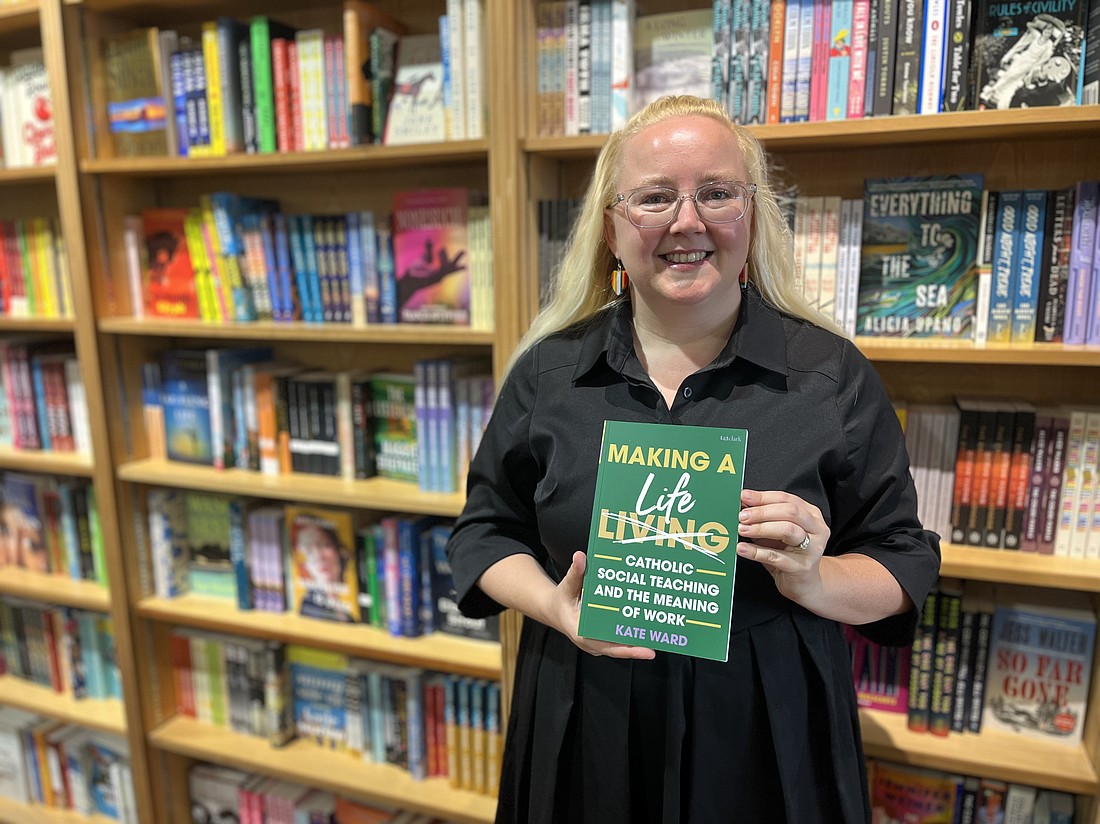
Every morning, Catholics in the Albany Diocese wake up, pour a cup of coffee and start their list of tasks for the day. For some, this is an enjoyable routine, but for others, one’s job or current work isn’t a calling; it’s a means to an end.
But does it have to be this way? Despite there being so many ways for people to work, there are so few ways in which that work is conducive to an easy, carefree lifestyle.
So what should work look like? It’s a question that Dr. Kate Ward dives into answering in her book, “Making a Life: Catholic Social Teaching and the Meaning of Work.”
“We tend to think of work in our culture as your paid job,” Ward said in an interview with The Evangelist. “You’re not supposed to like it. You only do it because you get paid. You wouldn’t work if you didn’t get paid, which isn’t really how the Catholic tradition looks at the human person.”
A theology professor at Marquette University in Wisconsin, Ward grew up in the Albany area and attended St. Vincent de Paul Church with her family. On July 16, she held a book signing at the Book House in Stuyvesant Plaza to celebrate her latest publication, which was released in February, and answered questions about the book.
Ward graduated from Harvard in 2005, where she studied psychology, and earned her M.Div. with a concentration in the Bible from Catholic Theological Union in 2011 and her Ph.D. in theological ethics from Boston College in 2016. She worked at AFSCME Council 31, a labor union organizing workers in Catholic health care settings, before beginning her doctoral studies.
“Making a Life” explores how work doesn’t have to be grueling or unfulfilling, but rather, through the guidance of Catholic Social Teaching, work is something that should nurture the community and human spirit.
Catholic Social Teaching, according to the United States Conference of Catholic Bishops, is “a rich treasure of wisdom about building a just society and living lives of holiness amidst the challenges of modern society.” The Church approaches these challenges through seven major themes: the life and dignity of the human person; the call to family, community and participation; rights and responsibilities; options for the poor and vulnerable; the dignity of work and the rights of workers; solidarity; and care for God’s creation.
“One chapter is just how Catholic Social Teaching looks at work because it is different than the way we tend to look at it in our society,” Ward said. “I think the biggest mind shift that people have to do is that unpaid work is also work (and) taking care of your own kids is work, even if you don’t get paid for it. The Catholic Social Thought tradition would say that is work. It has dignity and it deserves compensation. So really early, the papal tradition is thinking about how do we make sure that caregivers in the home … can afford to live while they’re doing their really important work of raising the next generation.”
Ward got the idea for “Making A Life” during the COVID pandemic, when people’s jobs — and their daily work at home — were suddenly upended.
“There was a lot of public conversation going on about how we call essential workers essential, but they’re some of the jobs that are the most low paid and the most dangerous,” Ward said.
At the same time, more conversations were coming up about the importance of caretaking and the work done at home: “People can’t really work when their kids are at home with them, and everything daycare workers and teachers are doing is actually keeping our economy running.”
Ward also noticed the change in work done in one’s leisure, something that came to the forefront for people stuck in quarantine or lockdown.
“At the same time, you have people discovering new hobbies or new practices — like making sourdough or getting more into their garden — because people were home and had more free time,” she said. “So sort of rediscovering how work can be good for you and can be relaxing in certain ways.”
Ward said all of these points “are things that Catholic Social Teaching thinks about and sees as part of the conversation about work. That all work has dignity, that all workers deserve safe conditions, that care work and unpaid work, and work in the home is work and is valuable, and that work can be good for us in certain ways.”
In her book, Ward explores how work is not only a paid job but a purposeful activity through five lenses: purpose, care, food, art and pay.
“This sort of balancing of the rest of your life with your paid work … they’re both important. They’re both ways for you to contribute to the world. But I think we had gone too far in that direction where your paid work is your end-all, be-all,” Ward said.
Ward hopes her readers finish her book seeing they “have the right to dignity at work.”
“Your work can be good for you — that might be paid or that might be unpaid work — and basically we can and should expect better in our work lives, in terms of the balance between paid and unpaid work and then rest and leisure. … We can and should expect better, and the Church supports you in expecting better.”
“Making a Life: Catholic Social Teaching and the Meaning of Work” is available for purchase at bloomsbury.com. Readers can use the code CLR BD8 to receive a 20 percent discount on the book at the publisher’s website.
- Full text: Pope Leo XIV’s Angelus address given October 25, 2026
- Jordan reels after terrorist attack on church, King vows ‘harshest retaliation’
- Scandinavian Catholics debate how to handle new wave of conversions
- Our Lady of Guadalupe apparitions are ‘true origin story’ for US, the Americas, LA archbishop says
- Why do some priests leave ministry? New study aims to find out
- Court allows multifaith challenge of Trump administration policy to permit ICE arrests at churches
- Pope Leo urges Catholic schools to be aware of ‘digital loneliness’ and ‘misguided meritocracy’
- Catholic sister challenges JD Vance over ICE tactics, treatment of immigrants
- Blaming Autumn: Unjust cranks in this excellent season of wonder
- Trump holds Oval Office meeting with some US bishops shortly before midterms
Comments:
You must login to comment.