


January 8, 2026 at 7:00 a.m.
|
Updated January 12, 2026 at 8:49 a.m.
Faith-Community: The missing link
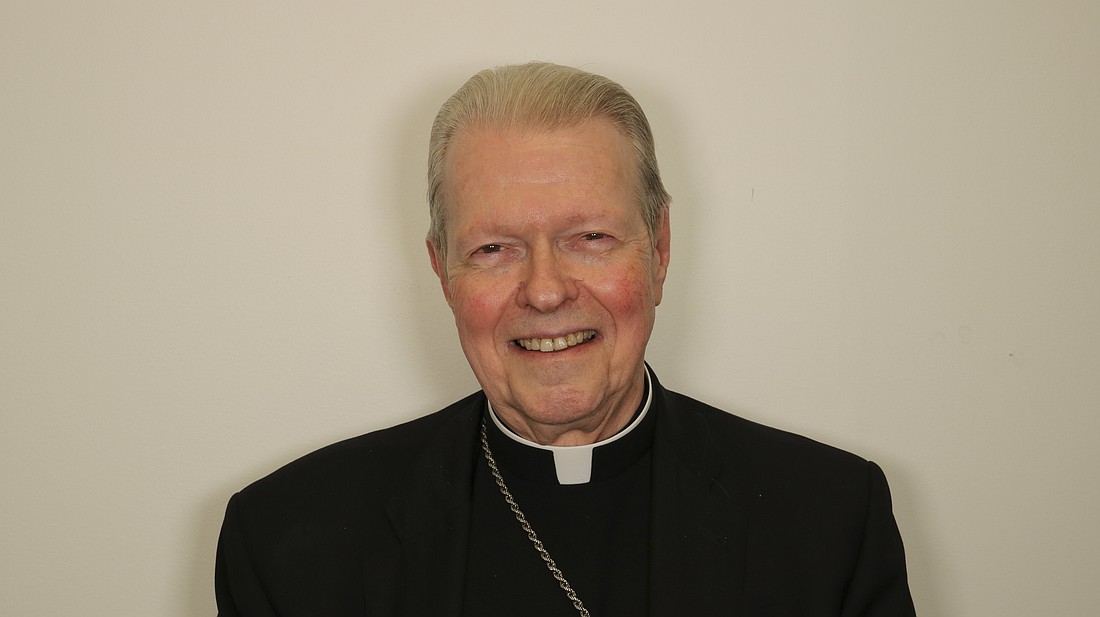
That hyphen between the often-linked elements of “faith” and “community” may carry more weight than we may realize at first. Loneliness is an epidemic in our society. “Linked in” as we may imagine ourselves to be electronically, the extent and depth of such cyber connections may often be no more stable and reliable than our GPS or the strength of our Wi-Fi signal as we migrate from zone to zone.
As one recently retired — though far from tired! — I could not help but notice an online ad about a curious “link” between social isolation and senior memory issues. Although genetics and physical conditioning certainly play their part, a direct connection may exist between a decline of in-person associations and the progression of dementia. On a similar scale, what we call “homelessness” is more than an absence of shelter. It is a form of social isolation precipitating a host of physical and psychological disabilities that typically spiral downward with the progression of the addictions often going with it.
Even if we focus only on those hoveled on park benches, church steps and various street outposts, the spread reaches well beyond urban centers. I often think of seniors — but also young people — who, though sheltered, lack food security and stability of care, living as they may in places where no reliable social unit welcomes or supports them.
Our hearts ached especially as we sought ways of reaching out to those who, in this past Christmas season, did not know the warmth and joy that the Prince of Peace longs to bring us all. Our Lord himself was laid in an animal feeder, neglected by the world he was born to save. The allure of the crêche that so inspires us has little to do with the comfort of its accommodations. Is it not, rather, the presence of figures who surround the infant: his parents, the shepherds, the angels, the Magi — as well as the animals?
We are blessed indeed by the social services, a certain “safety net” in most of our communities, by which the essentials of survival — food, clothing and shelter — are at least accessible to virtually anyone in need. Experience shows us, sadly, that none or even all of these addresses the fundamental hunger of every human being to be more than an organism to be sustained and maintained. We are made for others, to be a part of something larger than ourselves. We need friends, family and community. Not just a place to call our own, but a space where we are not alone, where we are known by name and our stories can be shared and respected, if not cherished and valued.
All of us can be grateful for organizations such as the City Mission of Schenectady and the many missions of our own Catholic Charities which bring not only physical and emotional comfort and support, but the spiritual connections of those essential relationships with God and community. I recently became aware of a faith-based association in Columbus, Ohio, known as Vista Village (see vistavillage.org). As their website describes, this model centers around creating a supportive community where those experiencing homelessness can heal, thrive and build a better future. More than just housing units, it is a growing community.
I have received the wonderful blessing of witnessing similar missions in some of the most poverty-stricken corners of the world, such as the dumps of Mexico City (see Hopeofthepoor.org) and the various outposts of the Mother Teresa’s communities, the Missionaries of Charity, in Kolkata and elsewhere. What I hope and pray for, as we begin this New Year of grace, is that we will find our own Kolkata even within the boundaries of our parishes.
Whether or not we know their names or even greet them, our neighbors certainly include those with whom we share a pew at Mass. Not a bad place to leap across the “hyphen” and begin to weave our faith into a fabric that might begin to take the form of a community. We know Jesus himself, an observant Jew, certainly went to temple. We also read in the Gospels that he spent a lot of time on the road, meeting people who were far from regulars, like lepers, paralytics, disabled — social outcasts of all kinds. We do not have to go far to find among us so many with whom Jesus identifies when he instructs us, “whatever you did for one of these least brothers of mind, you did for me” (Mt 25:40).
- Washington Roundup: Iran war powers bid fails; 1st ‘Take It Down’ conviction; Vance stumps for Orbán
- Pope Leo’s Africa trip will be his longest trip yet
- Latest Planned Parenthood report: abortions and taxpayer funding up, cancer screenings down
- ‘Children need you, they need your presence,’ Sister of Life tells educators at convention
- Indiana bishops put Eucharist at center of call to ‘integral ecology’ in new pastoral
- Vatican says report that Pentagon officials lectured top diplomat about Pope Leo is ‘completely untrue’
- Peruvian bishops’ conference secretary general steps down after abuse allegations surface
- Artemis II mission prompts look at Catholics’ longtime interest in space exploration
- Olympic and Paralympic athletes call meeting pope a ‘dream,’ ‘supercool,’ an inspiration
- A mercy that transcends our disappointments
Comments:
You must login to comment.