


February 25, 2026 at 10:13 a.m.
The right to protest peacefully
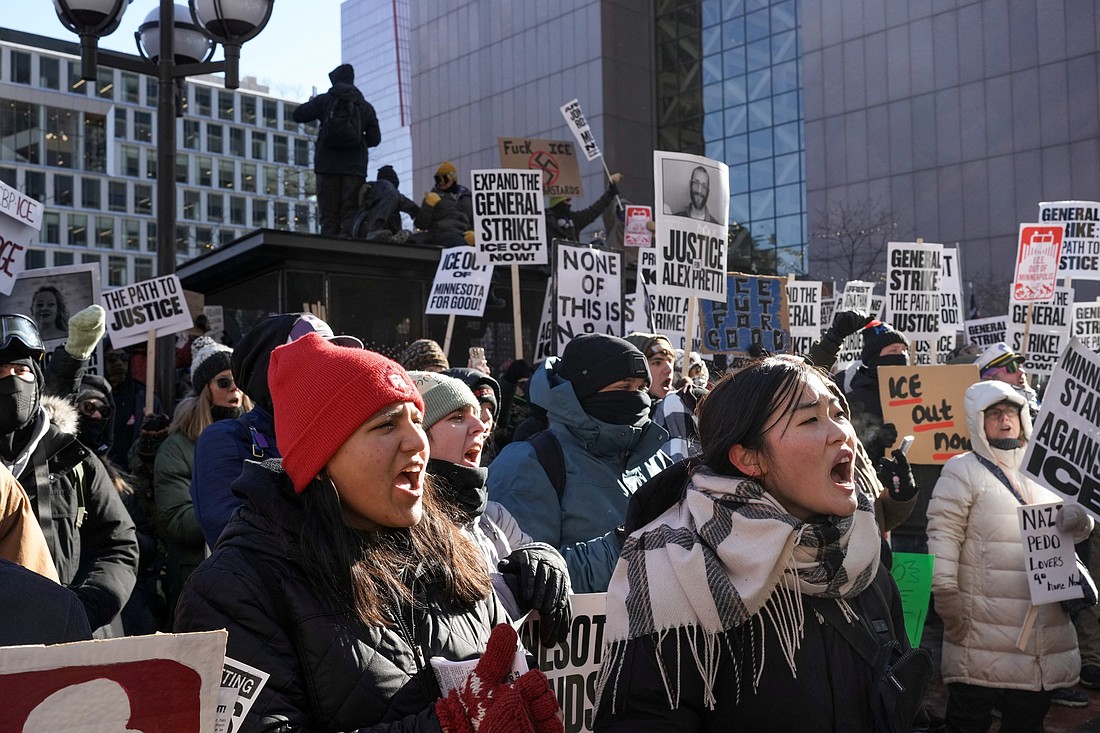
“But somewhere I read of the freedom of assembly. Somewhere I read of the freedom of speech. Somewhere I read of the freedom of press. Somewhere I read that the greatness of America is the right to protest for rights.” — Rev. Martin Luther King Jr.
As shepherds of the Catholic Church in the United States, we write with hearts shaped by the Gospel and a responsibility to speak when human dignity is threatened.
Our Catholic teaching holds that all people have a right and a duty to participate in society, seeking together the common good and well-being of every person, especially the poor and vulnerable.
As St. John XXIII wrote in his encyclical “Pacem in Terris,” every human person has a right to take an active part in public life, in reflection of our human dignity. In addition, due to our social nature, we have the right to meet and associate.
This teaching must guide both our public policies and enforcement of our laws. The First Amendment to the Constitution of the United States gives us the right to “peaceably assemble and to petition the government for redress of grievances.” This right is not a privilege granted to a few — it is a constitutional right afforded to all Americans. No one should fear for his or her life or safety for exercising this right.
Peaceful protest has long been one of many moral and civic means of drawing attention to injustice, and it remains essential to the health of our democracy, which when rightly ordered should promote the common good of all people.
My brother bishops through our episcopal conference have asserted that seeking peace does not require overlooking injustice. Peaceful protest should be rooted in respect for human dignity. It must bear the Holy Spirit’s marks of love, joy, peace, patience, kindness, generosity, faithfulness and self-control (Gal 5:22-23).
We see the importance of this right to protest today, as both immigrants and U.S. citizens are being racially profiled, targeted, detained or treated in ways that fail to uphold the inherent dignity of the human person and the sanctity of life.
Authorities must respect this peaceful protest and must themselves be bound by the law and exercise restraint.
The killing of two American citizens is horrific and rightfully inspires moral outrage. All people have the fundamental right — and at times the moral obligation — to speak out in diverse ways when certain actions undermine the common good. As the Rev. Martin Luther King Jr. so powerfully reminded us, “Injustice anywhere is a threat to justice everywhere.” Silence in the face of injustice risks complicity.
We bishops of the United States have called for a meaningful and humane reform of our immigration system. Our recent Special Message on immigration emphasized, “Human dignity and national security are not in conflict. Both are possible if people of good will work together.”
While people can honestly disagree about the ways to achieve these goals, we can all agree that we must urge our government officials to listen to the voices and concerns of the people they serve. No one should live in fear of being racially profiled. Law abiding citizens should not fear being wrongfully targeted or detained while going about daily life. No citizen should fear exercising his or her constitutional rights. A society rooted in justice cannot flourish where fear prevails.
Catholic social teaching reminds us that “nations must protect the right to life by finding increasingly effective ways to prevent conflicts and resolve them by peaceful means.” In this spirit, we call upon immigration authorities and all law enforcement agencies to carry out their duties in ways that respect the sanctity of all human life. Peaceful protest in pursuit of the common good serves as an expression of our personal dignity, including our right to participate actively in public life. Let the Church, in her wisdom, keep us rooted in the truth of faith: that we all are made in the image and likeness of God.
May the Lord send forth his Holy Spirit upon our nation. May he strengthen us to do justice, to love goodness, and to walk humbly with him. And may he guide us toward a future marked not by fear, but by mercy, justice and peace.
Bishop Brendan J. Cahill of Victoria, Texas, is chairman of the U.S. Conference of Catholic Bishops’ Committee on Migration, and Bishop Daniel E. Garcia of Austin, Texas, is chairman of the USCCB’s Subcommittee for the Promotion of Racial Justice and Reconciliation. This column was provided by OSV News.
- Trump lashes out at Pope Leo XIV amid Iran war rebuke
- ‘Cease fire’ Pope Leo asks world leaders as he expresses closeness to Lebanon, Sudan and Ukraine
- Pope decries horror, inhumanity that ‘some adults boast of with pride’
- Full text: Pope Leo XIV’s reflection at the Prayer Vigil for Peace April 11, 2026
- Opinion: The Artemis II mission, and the perspectives we gained
- Like the promise of Easter, new baseball season offers chance to begin again
- Bioethics of the brain: A conversation with a Catholic neurosurgeon
- Washington Roundup: Iran war powers bid fails; 1st ‘Take It Down’ conviction; Vance stumps for Orbán
- Pope Leo’s Africa trip will be his longest trip yet
- Latest Planned Parenthood report: abortions and taxpayer funding up, cancer screenings down
Comments:
You must login to comment.