


February 11, 2026 at 9:53 a.m.
THE THREE PILLARS OF LENT
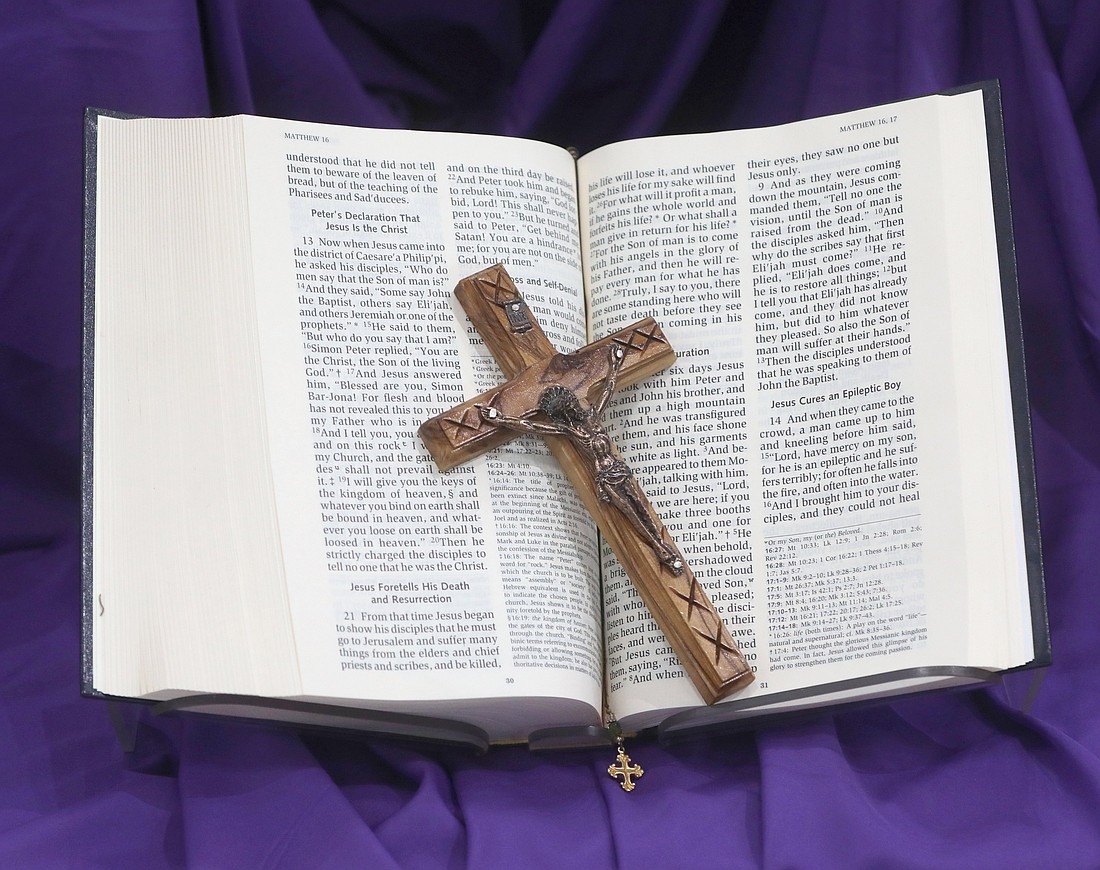
In this brief series, we will spend a little time reflecting on the wonderful season of Lent, especially what we might call the three “pillars” of Lent: prayer, fasting and almsgiving/acts of charity. These are pointed out by Jesus in the Sermon on the Mount and we hear them in the Gospel for Ash Wednesday (Matthew 6:1-6, 16-18). They form the backbone of our Lenten practices and journey. Cardinal Francis George summed up well the purpose of these three pillars when he wrote: “Almsgiving, fasting and prayer are all ways to empty ourselves, to create a space in our lives where God can do what he wants with us.” Just to add some extra weight to our season of Lent as a special time, we can also note that these three pillars come as a unified package. It is not prayer, or fasting, or acts of charity, but rather all three: prayer and fasting and acts of charity!
However, before we explore these pillars in more detail, it might be useful to step back for a moment and to have an overview of this special season. After all, Lent is a season with many levels and aspects: a very rich season indeed! Lent is also very much about what we might call “going back to the basics:” we are quite simply invited by Jesus to renew our faith, our hope and our love as his disciples.
Of course, Lent is about doing extra things or of making sacrifices, but perhaps we can also think of it as an intensification and refocusing of our spiritual lives: of building on what is there already and of developing good spiritual habits. In this way, all the good that we do can be carried on once the season ends. It would be a great pity if all the progress that we may have made during Lent evaporated on Easter Sunday! The word “Lent” in fact comes from the old Anglo-Saxon word for spring; for the season is indeed a time of renewal and rebirth.
Lent is also a journey, “40 days and 40 nights …” as the hymn states. Every journey needs a destination and so Lent is a journey “to climb the holy mountain of Easter.” It is important to remember that we do not take this journey alone. First of all we have the company of Jesus who encourages and urges us on. In a way, we accompany him through his temptations (First Sunday), his transfiguration (Second Sunday), his public ministry and signs of who Jesus is (Third, Fourth and Fifth Sundays) and especially in his last journey to the cross and resurrection (Palm Sunday, Holy Week and Easter). We also make the journey of Lent with all our brothers and sisters throughout the world. What we do here in our parishes and communities in our Diocese, people throughout the world (and for many generations too) also do, or have done. This is quite a thought! Our particular friends on this journey are our candidates and catechumens in the various OCIA programs, as they prepare for Easter. Do keep them and the OCIA teams in your special prayers.
Lent is very much a “penitential season;” that is a time for purification and of a renewed sense of conversion. We symbolize this in many ways. We have purple vestments at Mass, the music can have a particular tone and flavor, and our churches are decorated very simply. On Ash Wednesday we even follow a very ancient custom of having ashes put on our foreheads, or sprinkled upon us. This ritual action is mentioned a number of times in the Old Testament as a sign of penitence, or of mourning. This time of penance and conversion really involves a double action, as the words said when we receive the ashes remind us: “repent and believe in the Gospel.” Penance and conversion then mean both an acknowledgement of the need for forgiveness (repentance) and a resolution to overcome faults and failings, and therefore to grow spiritually and to live in Christ (believing … that is really believing, in the Gospel).
It also means deepening the virtues of faith, hope and love, and of being faithful to God by the sort of person we are and the life that we live. If one thinks about it, it is no coincidence that the word “conversion” is very close to the word conversation. In this sense, our continued conversion is really about developing our conversation with God: of being ever more open to God’s presence and power and of deepening our relationship with Him.
Our three pillars of Lent are key ways that, with God’s grace, all this can happen. Brant Pitre, in his book “Introduction to the Spiritual Life,” also notes how these three pillars tie in with the Gospel on the First Sunday of Lent about Jesus facing Satan and the three temptations in the desert (Matthew 4: 1-11). In fact, Pitre goes further, reflecting a very ancient Christian tradition, by making another crucial connection. He writes that the three temptations of Jesus actually reflect the three temptations that Adam and Eve faced in the Garden of Eden (see the First Reading for the First Sunday in Lent Year A, Genesis 2:7-9, 3: 1-7). These three temptations (and corresponding vices) are about a “disordered human desire for pleasure, possessions and pride.” The three pillars of Lent are, therefore, like a powerful antidote to combat these three foundational temptations and vices.
So let us pray for each other that we will journey well during this holy season of Lent. May we indeed repent and believe the Gospel. May our conversation with God grow and deepen. May our prayer, fasting and almsgiving make that extra space for God in our lives, so that he will fill us even more with His gifts. Only those gifts will help us face temptations and our demons. May this Lent be indeed a true “springtime” for us all.
Father Barratt, STL, PhD, KCHS, ChM, is the director of the Office of Prayer and Worship, a member of the Presbyteral Council & College of Consultors and pastor at Holy Trinity Parish in Hudson-Germantown — all in the Diocese of Albany — and adjunct professor at Siena College and St. Bernard’s Postgraduate School of Theology and Ministry in Albany and a Chaplain to His Holiness.

- ‘You will be with me in paradise’: Following the good thief’s simple steps of repentance
- Missouri bishops back amendment to limit abortion and gender transition for minors
- Boston bishop ‘honored’ to be named rector of seminary, ‘the heart of the diocese it serves’
- Dahlgren Dialogue: People of faith can strengthen democracy in challenging times
- ‘Father, forgive them’: How Jesus directs us to life devoted to prayer
- Washington Roundup: Senate passes DHS funding package; Mullin confirmed as secretary
- ‘House of David’ star opens up about Catholic conversion as new season premieres
- Kettelkamp to step down as adjunct secretary of Vatican commission to protect minors
- Spanish bishops, experts say euthanasia for young Noelia a ‘social defeat,’ ‘collective failure’
- On front lines of war, Basilian sisters bring the presence of God
Comments:
You must login to comment.