


August 19, 2026 at 10:22 a.m.
The foundation of our Church
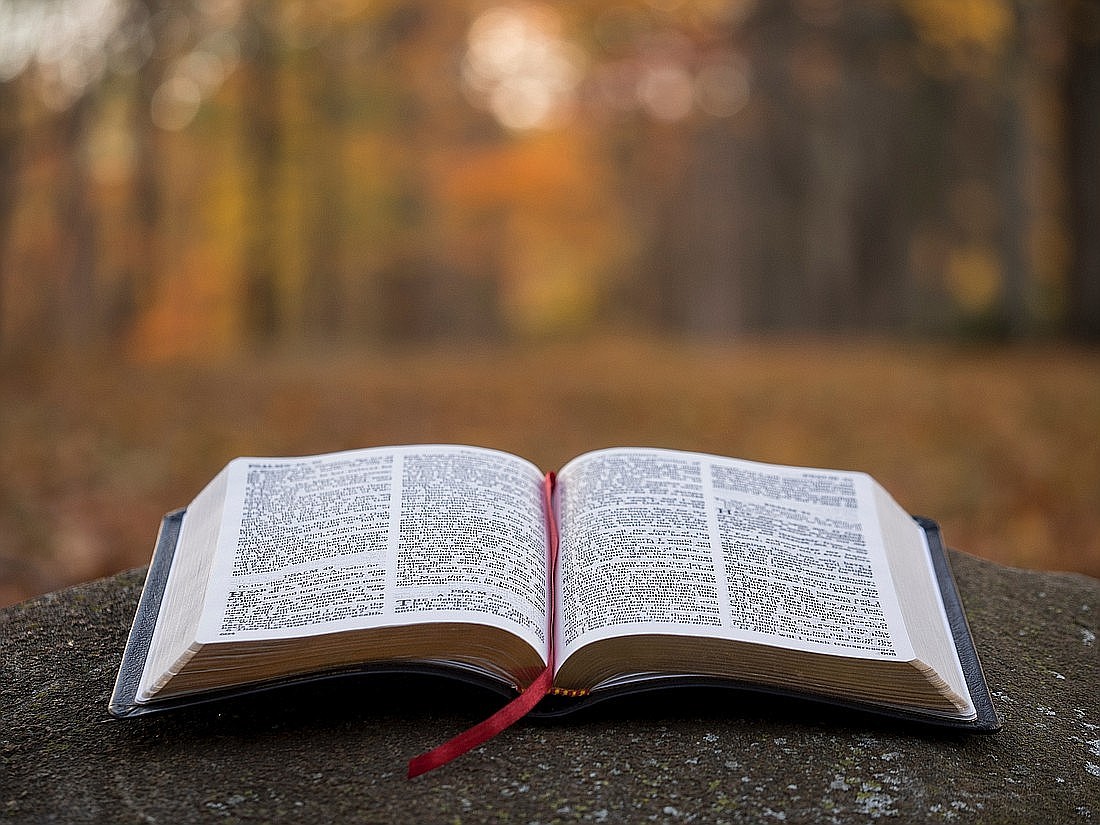
“I will give you the keys to the kingdom of heaven. Whatever you bind on Earth shall be bound in heaven; and whatever you loose on Earth shall be loosed in heaven.” — Matthew 16:19
The words of the Lord Jesus to Simon Peter, spoken at Caesarea Philippi, are among the most foundational in all of Scripture for the Catholic understanding of the Church. They are not merely an honorific for Peter, but the institution of something utterly new: the visible headship of the apostolic college, the Petrine office, and ultimately the papacy.
The location is not incidental. Caesarea Philippi was a place known for pagan worship, built near a shrine to the Greek god Pan. It is in this context of competing worldviews that Jesus asks the most important question in human history: “Who do you say that I am?” (Mt 16:15). And Peter, by divine illumination, replies: “You are the Christ, the Son of the living God.” This confession is not from flesh and blood, but from the Father. Jesus replies not simply with praise, but with institution: “You are Peter, and on this rock I will build my Church.”
Here, we see the convergence of identity and mission. The name “Peter” — Petros, the rock — is not a poetic flourish, but a covenantal reality. Just as Abram became Abraham, and Jacob became Israel, so Simon becomes Peter, his identity transformed in light of a divine mission. As Saint Leo the Great preached, “The privilege of Peter remains, wherever judgment is rightly passed. And wherever there is perseverance in what he decreed, there is the solidity of the Rock.”
To understand this in a theological light, we look to Isaiah 22 in our First Reading, where the Lord says of Eliakim: “I will place the key of the House of David on his shoulder.” This passage is the background for Jesus’ own words about giving Peter “the keys of the kingdom of heaven.” In the Davidic kingdom, the steward who held the key governed with the authority of the king. Christ, the Son of David, entrusts Peter with real authority to govern His Church. The Catechism of the Catholic Church affirms: “The Pope, Bishop of Rome and Peter’s successor, is the perpetual and visible source and foundation of the unity both of the bishops and of the whole company of the faithful.”
Saint Thomas Aquinas, in his “Commentary on Matthew” and the “Summa Theologiae,” explains that Peter’s confession expresses the perfection of faith: “In this confession, there is contained both the humanity and divinity of Christ,” and therefore, it is the solid foundation upon which the Church must be built. Christ is the true Rock (1 Cor 10:4), but He chooses to build His Church on the instrumentality of Peter to safeguard unity, orthodoxy and continuity.
This truth is not only ecclesiological but deeply pastoral. Peter was no stranger to failure. He would falter, deny and weep bitterly. Yet Christ still chose him, not because of Peter’s natural strength, but because of the supernatural grace of his confession and his vocation. The papacy, then, is not an office of perfection, but of grace-imbued service, a visible sign that Christ does not abandon His Church. The pope is not above the Church, but within her, as servant of the servants of God.
For those of us in priestly or theological formation, Peter’s example is both bracing and consoling. Bracing, because it reminds us that ecclesial office is always ordered to confession of Christ and self-emptying service. Consoling, because it shows that Christ uses fragile vessels — so long as they cling to Him with faith.
And for all the faithful, this Gospel teaches that the Church is not a human invention, but a divine institution. Amid crises and scandals, we must never forget that Christ, not man, is the builder. The gates of hell will not prevail, not because of our strategies, but because of His promise.
Let us therefore renew our love for the Church, founded on Peter but sustained by Christ. Let us pray for the Holy Father, Pope Leo XIV, that he may be a faithful steward of the keys. And let us echo Peter’s confession, not only with our lips but with our lives: “You are the Christ, the Son of the living God.”

- Who is St. Gregory the Illuminator?
- Pope Leo to offer 12 public Masses in November, including in a Rome cemetery
- Be witnesses of God’s love, nuncio urges Baltimore Catholics in visit to nation’s oldest see
- Ethiopian Orthodox leaders call for justice, protection after 60 Christians killed in attacks
- Montse Alvarado prepares to step into Vatican communications prefect role Nov. 1
- Bishops apologize over ‘manipulated’ White House video of prayer over Trump
- Report: 4 in 10 Catholics have experienced racism
- Washington Letter: Trump meeting with a dozen bishops underscores major policy tensions
- Pope recognizes heroic virtues of 6 Catholics, from missionary bishops to Padre Pio’s spiritual son
- Pope Leo’s doctors confirm his visit to Latin America two weeks after lung surgery
Comments:
You must login to comment.