


May 7, 2025 at 3:16 p.m.
Conclave: First ballot fails to elect pope
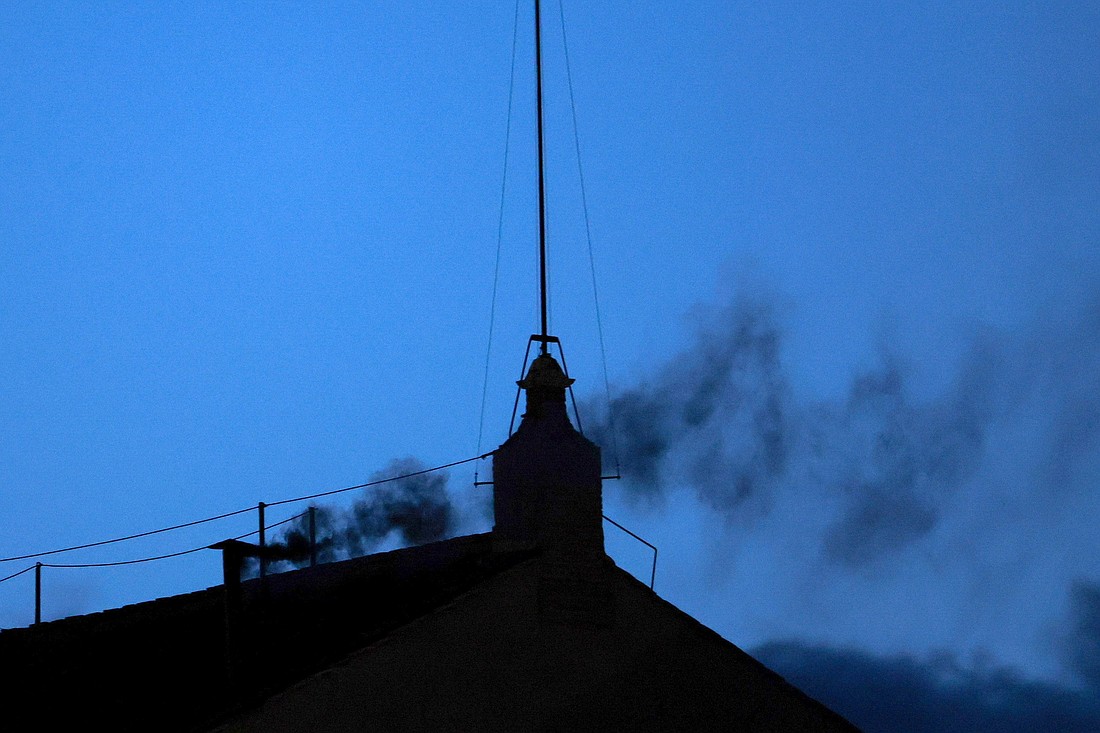
VATICAN CITY (CNS) -- As expected, the 133 cardinals who entered the Sistine Chapel May 7 failed to elect the next pope on their first ballot.
After celebrating Mass for the election of a pope, processing into the Sistine Chapel and swearing a solemn oath of perpetual secrecy on the conclave proceedings, the cardinal electors cast their first ballot in the conclave.
The ballot, however, failed to reach the two-thirds supermajority, or 89 votes, that is required for a new pope to be elected. With the largest number of cardinal electors ever to vote in a conclave, and therefore the most votes to count, the black smoke arrived two hours later than the expected 7 p.m. Rome time.
Only one ballot was cast on the first day of the conclave. On following days, up to four ballots are cast each day. If, after three days of voting, they have not elected anyone, the cardinals can take a maximum on one day for prayer and informal discussion.
Pope Benedict XIV was elected on the fourth ballot of the 2005 conclave and Pope Francis was elected on the fifth ballot of the conclave in 2013.
An estimated 30,000 people gathered in St. Peter's Square the first evening of the conclave even though they did not expect to see white smoke emerging from a chimney on top of the Sistine Chapel, signaling that a pope had been elected.
Many were carrying flags -- pilgrims waved the flags of the Philippines, Brazil, the United States and Nicaragua among others.
Maggie Popp from North Dakota, who was in St. Peter's Square with her husband and two young children, told Catholic News Service that she planned to watch the smoke each night.
"We're here as a family because it feels like a once in a lifetime opportunity," she said. "We live here in Rome, so we figured it would be a great opportunity to bring our little boys to experience this, even if they won't remember, and ultimately pray for whoever it is that we're going to receive as a new Holy Father."
Gabrielle Estrada from San Antonio, Texas, extended her trip through Europe to be in Rome for the conclave. "I grew up Catholic, so I remember watching the smoke on the TV growing up and thought it would be so cool to be here."
As a young adult, she said, "I'm curious to see how he is going to incorporate young adults."
Often, she said, "this is the time that people stray away from her faith, and I would love to see him put emphasis on that age group and get us excited about the history of our faith and everything that comes with it."
"Rome, right now, is the center of the universe," said Father Anthony Saiki, a priest of the Archdiocese of Kansas City, while gesturing at the throngs of people gathered in St. Peter's Square. "In this moment, the church is incredibly united."
"If anybody doubts the relevance of the faith, if anybody doubts the relevance of the Catholic Church," he told CNS, "all eyes are on the church right now, all eyes are looking for the next successor of Peter, so it's a moment of hope, it's a moment of excitement and joy."
- Alberta rejects separation in referendum, but ‘road to healing will be a long one’
- Archbishop Coakley: Botched execution, proposed livestream reveal ‘inhumanity’ of death penalty
- Most Catholic health institutions in Illinois temporarily protected from assisted suicide law
- Vatican’s doctrine office publishes ‘Venite ad Me’ on passing on the faith amid ‘epochal change’
- Meeting US Jewish leaders, pope warns differences must not fuel prejudice
- Notre Dame welcomes Banana Ball — and a story of perseverance
- 48 years after installation, St. John Paul II provides moral foundation for today’s tech race
- Pope invites youth to bring wounds, dreams to Seoul as WYD registration opens
- Haitian Catholics in Philly mark 50 years of faith, despite immigration crackdown
- Archbishop ‘grateful, honored’ Indianapolis chosen to host 2029 National Eucharistic Congress
Comments:
You must login to comment.