


December 27, 2025 at 10:22 a.m.
Dorothy Day’s ‘Duty of Delight’
When doing some spiritual reading recently, I came across a phrase attributed to Dorothy Day: the “duty of delight.” It stopped me in my tracks because it resonated with truth, as so many of her quotes and writings do. When I searched the term, I found that her diaries had been published under that title, and I quickly searched my local library to see if I could get my hands on the book. Bingo. A few days later, my hold was waiting for me, but when I saw the size of this volume — all 669 pages of it — I assumed it would be another non-starter, one more book that sits in my TBR pile and gets returned to the library having remained unopened.
I should have known that Day’s writings would not be easy to dismiss or ignore. From the opening quote that sets the tone, I knew I’d likely need to buy a copy of this book (edited by Robert Ellsberg) so that I could savor it without a deadline, mark it up with notes, and come back to it again and again as spiritual food to buoy me up during these dark times.
On Feb. 24, 1961, Day wrote: “Today I thought of a title for my book, ‘The Duty of Delight,’ as a sequel to ‘The Long Loneliness.’ I was thinking how, as one gets older, we are tempted to sadness, knowing life as it is here on earth, the suffering, the Cross. And we must overcome it daily, growing in love, and the joy which goes with loving.”
To which I can only say, “Amen,” even as I cringe a little at the challenge this quote presents to us. Overcoming the darkness and suffering we see here on earth is no small task. Growing in joy seems near-impossible at times, and yet Day, like so many other saints before and after her, reminds us that joy and love and hope are our true calling, one that is grounded in the salvation that was won for us when God took on human form and changed the course of history — the world’s and our own.
As we celebrate the Incarnation today and continue to do so in the weeks ahead, can we return to the “duty of delight,” finding God present not just in the manger on Christmas morning but in the mundane tasks of our daily lives and even in the difficult moments that threaten to pull us down?
We often look at Dorothy Day, who is a Servant of God on the path to canonization, and focus on her radical poverty on behalf of the poor. Like St. Francis of Assisi, she didn’t just preach the Gospel with words; she lived it with her very life, taking on the mantle of poverty as her own through the Catholic Worker Movement she founded with French philosopher Peter Maurin. But what we often gloss over is her radical life of prayer. She prayed the Liturgy of the Hours, attended daily Mass, said the Rosary daily, did a nightly examination of conscience, read about God and talked about God, and, as she wrote in her 1936 personal “rule” of life, set out daily to “practice the presence of God.”
While many of us have been wowed by Day’s personal history and public writings, it is in her daily diary entries that we get a glimpse into the struggles and joys of the woman who set out to do exactly what Jesus asked all of us to do: love others, no matter the cost and no matter how difficult. Yes, the entries are filled with details of running her Catholic Worker houses, dealing with political issues, and paying the bills, but sprinkled in between are her notes on birdsong and bus rides, the sound of the sea and the sight of her daughter, Tamar, at play — the “delights” that dust every life like starlight filling a night sky. We have many duties in this world, let delight be one you take time to fulfill.
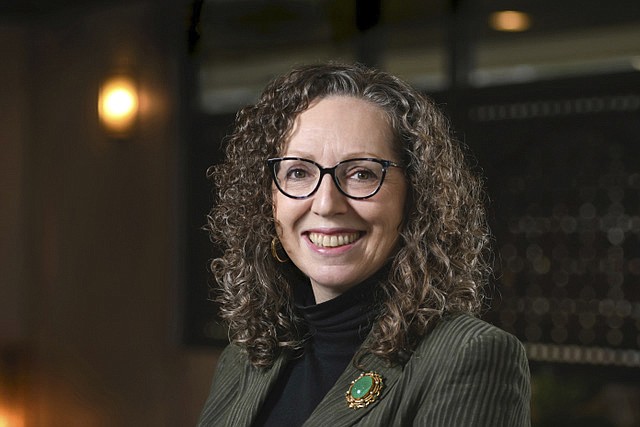
Mary DeTurris Poust is a writer, retreat leader, and spiritual director living in the Capital Region. Visit her website at www.NotStrictlySpiritual.com.



- Pope Leo XIV calls for dialogue, not weapons, as Iran war enters 4th week
- Pope Leo XIV names Australian archbishop prefect of Dicastery for Legislative Texts
- Cardinal Dolan, Bishop Barron push back on claims of anti-Catholic bias from former commissioner
- Russian drone strikes damage historic church, monastery in Lviv ahead of Holy Week
- New US global health policy seen as a way to eliminate malaria in concert with faith leaders
- Supreme Court weighs whether policy of turning away asylum-seekers at border can be reinstated
- Residents turn to resistance in faith as settler violence terrorizes West Bank Christian village
- Gosnell death brings closure, renewed pro-life commitment, says investigating detective
- What is the point of a pilgrimage?
- Life must be defended in a world wounded by warfare, pope says
Comments:
You must login to comment.