


December 17, 2025 at 10:29 a.m.
Christmas: A birth and a wedding
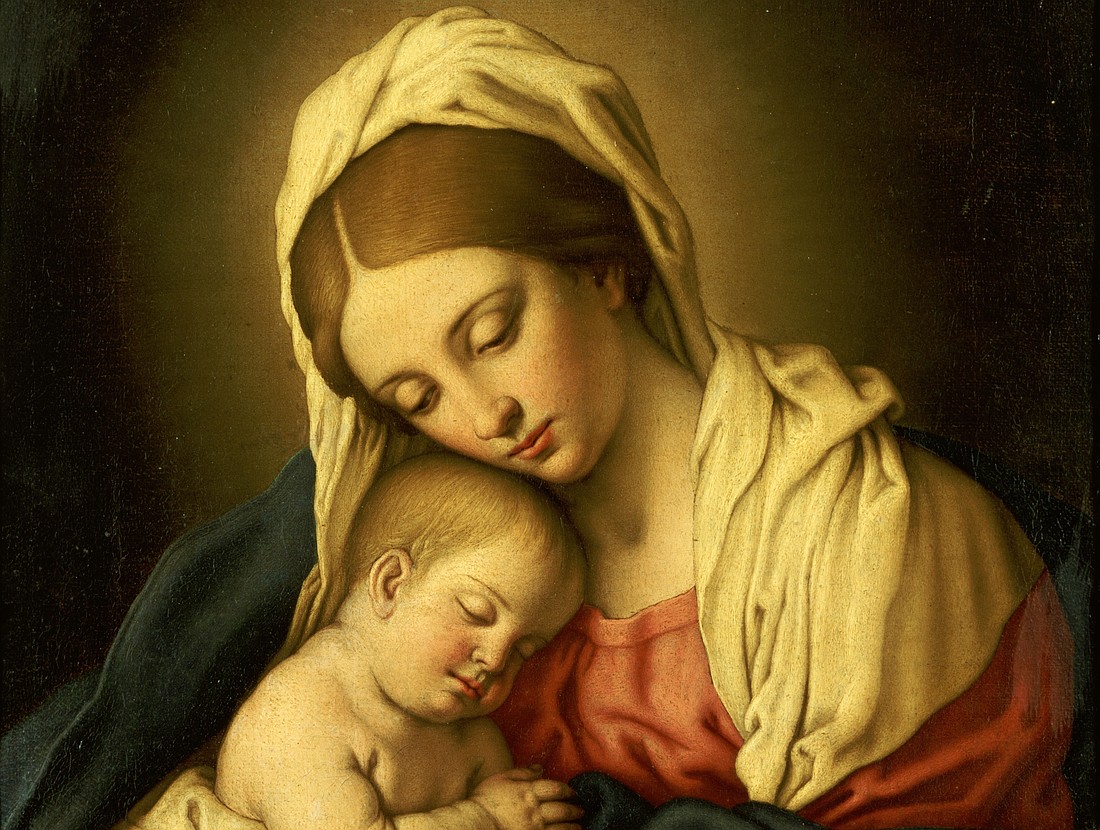
On this Feast of the Nativity, we celebrate a birth and a wedding at the very same time.
The birth is something everyone on earth today knows about. Yet, long ago not everyone knew that the Savior of the world was to appear in a humble manger. The angels knew, singing to the gathered shepherds, “Glory to God in the highest and on earth peace to those on whom his favor rests” (Lk 2:14). The shepherds, from whom the kings of Israel once came forth, now hidden alone in a field, knew: “They went in haste and found Mary and Joseph, and the infant lying in the manger” (Lk 2:16). The animals gathered around the infant King knew: “O great mystery, and wonderful sacrament, that animals should see the newborn Lord, lying in a manger” (Responsorial Chant, Matins of Christmas).
His mother knew, keeping “all these things, reflecting on them in her heart” (Lk 2:19). But the powerful of the world did not know. Caesar Augustus, Herod, the powers and principalities — they did not know. For the powerful would never expect a king to be born in a manger. The strong would never expect salvation to take place in weakness.
Still, we do not close our businesses and give gifts simply to celebrate the birthday of our Lord Jesus Christ thousands of years ago. We celebrate the wedding that took place that night when humanity and divinity were forever wed.
For as the Gospel on Christmas Day announces: “In the beginning was the Word, and the Word was with God, and the Word was God” (Jn 1:1). God’s Word, which is itself God, which gave shape to all of creation, now assumes flesh: “And the Word became flesh and made his dwelling among us, and we saw his glory, the glory as of the Father's only Son, full of grace and truth” (Jn 1:14).
In that infant born in Bethlehem, humanity and divinity kiss. In that child born in the poverty of a stable, the Son enters into solidarity with men and women. In the child wrapped in swaddling clothes, we encounter the glory of God among us. It is for this reason that we can sing on Christmas night: “Today is born our Savior, Christ the Lord” (cf. Lk 2:11). For what took place on Christmas has never ended. The Son revealed the depths of his love in taking on the humility of human flesh forever.
And now, we too can share in the divine life given to us by the Son. In the birth of Jesus, the Son assumed everything about what it means to be human except sin. He experienced the fragility of birth. He knew what it was like to tenderly hold his mother’s or his father’s hand. He suffered through the death of his father, Joseph. He hungered and thirsted in the desert. He was rejected by the unjust. He died upon the cross. And he was raised again. This is the fullness of a human life. And thus on the Feast of Christmas, we celebrate that it is precisely through the human condition that we will be saved.
So rejoice this day. For the birth of our Lord Jesus Christ is the beginning of the wedding feast of the Lamb. And we are guests to both. And in our feasts, and in our opening of gifts, and in our time spent with family, let us remember that on this day: The glory of the Lord will be revealed, and all flesh will see the salvation of our God (cf. Is 40:5).
Timothy P. O’Malley is a theology professor at the University of Notre Dame, director of education at the McGrath Institute for Church Life and academic director of the Notre Dame Center for Liturgy.

- Jordan reels after terrorist attack on church, King vows ‘harshest retaliation’
- Scandinavian Catholics debate how to handle new wave of conversions
- Our Lady of Guadalupe apparitions are ‘true origin story’ for US, the Americas, LA archbishop says
- Why do some priests leave ministry? New study aims to find out
- Court allows multifaith challenge of Trump administration policy to permit ICE arrests at churches
- Pope Leo urges Catholic schools to be aware of ‘digital loneliness’ and ‘misguided meritocracy’
- Catholic sister challenges JD Vance over ICE tactics, treatment of immigrants
- Blaming Autumn: Unjust cranks in this excellent season of wonder
- Trump holds Oval Office meeting with some US bishops shortly before midterms
- Savannah bishop shares timeless witness of Georgia Martyrs ahead of beatification
Comments:
You must login to comment.