


December 12, 2025 at 8:39 p.m.
DIOCESE NOT LIABLE IN ST. CLARE'S CASE

In a much-anticipated verdict in a case that has been ongoing for years, the Diocese of Albany was found not liable for the collapse of the St. Clare’s pension fund.
After only one day of deliberations on Dec. 12, the St. Clare’s jury returned that verdict early in the evening last Friday. The jury, however, did find the other six defendants — which included Bishop Emeritus Edward B. Scharfenberger, the late Bishop Howard J. Hubbard, and the late Father David LeFort — were all partially at fault.
In the reading of the jury’s verdict sheets, which totaled 41 pages of questions and answers, the Roman Catholic Diocese of Albany was found to be zero percent responsible, St. Clare’s president Joseph Pofit was found 25 percent at fault, St. Clare’s Corporation, former St. Clare’s Hospital President Robert Perry and Bishop Hubbard were all found 20 percent at fault, while Bishop Scharfenberger was found 10 percent at fault, and Father LeFort was found 5 percent at fault.
A jury then unanimously agreed that the St. Clare’s pensioners were owed $54.2 million in damages to make them whole.
“As grateful as we are for the jury’s informed decision, we are still very much aware of the hurt felt by the St. Clare’s pensioners who cared for the sick and the poor throughout the long history of St. Clare’s Hospital,” the Diocese of Albany said in a statement after the verdict. “This does not mean that we will turn our backs to the pensioners for as Bishop (Mark) O’Connell has noted, they are a part of our flock; they are still in need of healing.”
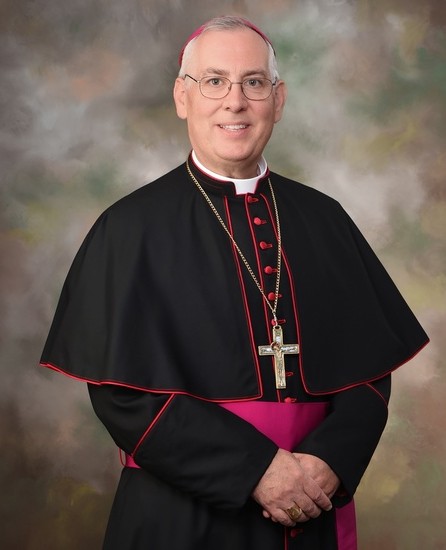
Bishop O’Connell, who was installed as the 11th Bishop of Albany on Dec. 5, said in a media session before the verdict last week when asked about the St. Clare’s pensioners that “I care deeply about their hurt (and) not having their pensions.”
The AARP, which first sued the Albany Diocese in 2019, represented the over 1,100 pensioners who received either a fraction of or none of their promised pension plan, and was later joined by the New York State Attorney General’s Office in suing the Diocese in 2022.
State Attorney General Letitia James released a statement following the verdict, calling the ruling “a major victory for every St. Clare’s Hospital employee who tirelessly cared for patients and was unjustly denied their pension and the chance to retire with dignity.”
“For years, St. Clare’s Hospital’s leadership misled workers about their pensions and mismanaged the pension program, leaving 1,124 workers with little to nothing to retire on. Today, a jury ruled in the pensioners’ favor and held each and every individual who oversaw St. Clare’s Hospital’s pension accountable for years of neglect and mismanagement. No one should ever be deprived of the pension they were promised, and my office will not hesitate to pursue justice against any individual or organization that violates our laws or New Yorkers’ trust.”
When the jury’s verdict sheets were read off in court, the questions began with the Diocese of Albany’s relationship to St. Clare’s Hospital.
To the first three questions — Did the Albany Diocese completely dominate and control the defendant, St. Clare’s Corporation, and its pension plan? Did the Diocese of Albany owe a fiduciary duty to St. Clare’s pensioners? Was the Albany Diocese a trustee of St. Clare’s under the Estates, Powers and Trusts Law (EPTL)? — the jury said no, and unanimously agreed.
The jury did find that St. Clare’s Hospital breached its fiduciary duty to the St. Clare’s pension plan beneficiaries and that the breach of that duty played a substantial factor in causing injury to the St. Clare’s pensioners.
Similar rulings were found regarding Pofit, Perry, Bishop Scharfenberger, Bishop Hubbard and Father LeFort. The jury found that each individual breached their fiduciary duty to the St. Clare’s pension plan beneficiaries, that each individual failed to properly administer the pension plan, and that this failure and breach of duty played a substantial factor in causing injury to the St. Clare’s pensioners.
The jury also ruled that the plaintiffs would be awarded punitive damages; however, an additional trial will be conducted to determine how much. That trial, which will be made up of the same jury, was expected to begin on Tuesday, Dec. 16, but was delayed when Pofit and Bishop Scharfenberger both filed for bankruptcy.
Prior to that delay, attorneys met to discuss the next steps in determining punitive damages for the plaintiffs.
To clear up confusion, Supreme Court Judge Vincent Versaci clarified that the Albany Diocese as a whole was not held liable by the jury, but that they may be involved in the punitive damages case by virtue of their employees who were found directly liable in the case.
“The trial court finds that the verdict sheet is clear: the plaintiffs did not prove by preponderance of evidence in respect to the piercing of the corporate veil cause of action, the breach of contract cause of action, and the breach of fiduciary duty against the Diocese,” Versaci said. “However, they did find the Diocese vicariously liable for the actions of their employees, being Bishops Hubbard and Scharfenberger, and Pofit.”
“Far as I’m concerned, that is going to be part of the punitive damages trial, or trial number 2, as required by the law,” he continued.
Michael Costello, attorney for the Diocese, voiced his disagreement with any continued involvement.
“The Diocese should not be in that trial because of the clear decision by the jury in the verdict sheets, which should speak for themselves,” he said, referring to the percentage of fault findings that listed the Diocese with zero culpability.
On Dec. 12, emotions ran high in the gallery of the courtroom as each ruling was read out loud. Tears were shed and tissues were passed between those in the room, which was filled with former St. Clare’s employees who came out to hear the ruling.
For years, pensioners were left in the dark about the reality of St. Clare’s pension plan status. After St. Clare’s Hospital closed its doors in 2008, the St. Clare’s Corporation was formed to oversee and administer the pension plan for its employees.
Pensioners were first notified of the plan’s failing status in 2018, despite annual letters reiterating a secure plan, which had also received $28.5 million from the state. The same year, the pensioners found out the plan was going to be terminated and they would receive little or nothing. The plan officially was shuttered in 2019 with an approximate $50 million shortfall. Of the total number of retirees, 650 would receive nothing from the plan, while 450 were to receive 70 percent of their expected benefits.
In closing arguments on Dec. 11, Assistant Attorney General Monica Connell said that the pension plan had been “a sinking ship” for years, and argued that the board of trustees and the Albany Diocese were both responsible for ignoring the failing plan.
Costello said that there “was not a shred of evidence” showing the Albany Diocese dominated or owned the St. Clare’s Hospital or its pension plan responsibility.
Defendants agreed that the Catholic Church was simply a religious sponsor for the hospital. St. Clare’s was founded in 1949 with the Albany Diocese and the Franciscan Sisters of the Poor as canonical co-sponsors, designed to help carry out the Catholic mission of caring for the poor, sick and financially struggling.
Anthony Cardona, attorney for Bishop Scharfenberger, reiterated a similar argument, that this does not make the defendants liable, noting, “It was the DOH (Department of Health), not the bishop, not the Diocese,” that was responsible for St. Clare’s closing and the subsequent failure of its pension plan.

- At Colosseum, pope carries the cross, leading thousands in Good Friday prayer for suffering world
- Good Friday liturgy underscores need to break ‘this chain’ of violence
- Jerusalem’s Holy Week embraced with silent prayer, intimate liturgies as war continues to escalate
- Pope Leo XIV calls Israeli, Ukrainian leaders on Good Friday, urging peace
- ‘I carry all these sufferings, too, in my prayer’: Why Pope Leo XIV is carrying the cross at all 14 stations Good Friday
- Full text: Stations of the Cross meditations Pope Leo XIV will pray at Colosseum
- Washington Roundup: Bondi fired, tentative DHS funding deal struck, Johnson Amendment case dismissed
- In South Sudan, people have been through Way of the Cross, and long for Easter peace, bishop says
- Matisse’s 14 stations, depicting the ‘most profound of human dramas,’ on exhibit in Baltimore
- Cardinal Ouellet defamation suit against accuser awaits judge’s verdict after early March trial
Comments:
You must login to comment.