


December 3, 2025 at 9:07 a.m.
So too, you also must be prepared
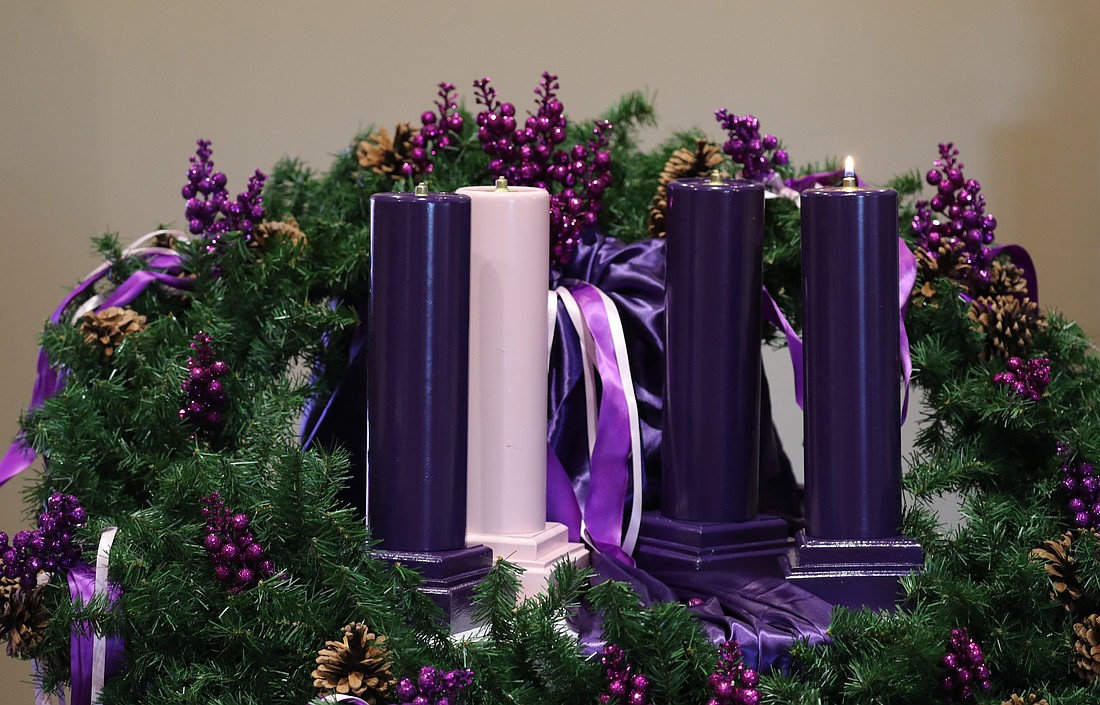
Each year it seems to take me by surprise: autumn fades, and suddenly Christmas is upon us! On (the) first Sunday of Advent, the Church seems to anticipate these very feelings. The theme she proposes is unmistakably vigilance. The prayers and readings urge us to be mindful of the imminent coming of our Lord at the end of time. They remind us that our primary goal is not reaching Dec. 25, but preparing for the arrival of the Son of Man and our citizenship in the heavenly kingdom. If we truly wish to reach this goal, we might think of Advent not merely as a season we pass through, but as a state of mind.
The earliest Christians lived in a perpetual sense of Advent. For them, the coming of the Lord was not a distant idea but an imminent reality. In his letter to the Romans, St. Paul teaches them — and us — how to practice this spirituality through behaviors that make “no provision for the desires of the flesh.” He lists drunkenness, promiscuity, lust, rivalry and jealousy. Anyone who believes Scripture is out of touch with modern culture need only read this passage. The stumbling blocks to spiritual growth are no different now than they were in the first century. In fact, with technological advances, they may be even more persistent and require even greater vigilance today. Nevertheless, just as the early Christians were warned, we too are told: “Awake from sleep, for our salvation is nearer now than when we first believed; the night is advanced, the day is at hand.” The Church affirms the importance of this message by placing it each morning in the Liturgy of the Hours. Each new day is a renewed opportunity to prepare for the Lord’s coming, to throw off the works of darkness.
Yet blatant sinfulness is not the only obstacle we face. It is easy to treat each new day as just another day. The steady rhythm of our routines can lull us into the illusion that we have unlimited time, and we set our priorities accordingly. In (this past Sunday’s) Gospel, Jesus describes the coming of the Son of Man in such an ordinary context. He does not depict apocalyptic destruction or enumerate sins to avoid. Instead, He simply notes that people were “eating and drinking, marrying and giving in marriage.” They were merely living life — making plans, going about their routines. And it was precisely in the midst of such ordinary moments that the flood arrived. This too is a warning for us. The coming of the Son of Man will meet each of us in the midst of whatever we are doing, and whatever plans we have made; we do not know the day or the hour.
Every year, once Christmas (and Easter) passes, I feel a bit of regret that I didn’t prepare as fully as I could have. During Advent and Lent, there always seems to be a better time to set down the phone, close the laptop and pick up spiritual reading. Another week always feels more convenient for charity, confession or attending an extra Mass. This notion that we have unlimited time to do the right thing is a persistent lie from the Evil One. His purpose is to distract us from deepening our faith, strengthening our spiritual practices and developing a meaningful relationship with God. This is why each new day and each new liturgical season is such a gift. They give us another chance to begin anew, renew our resolve and start again.
To understand Advent even more deeply, we must also understand its name. “Advent” translates the Greek word parousia, meaning the arrival or presence of someone great. In theology it refers especially to the coming — the arrival of the Son of Man at the end of time. The earliest Christians believed the Lord would return soon, but they also understood that His coming was made present each time they “broke the bread” — celebrating the Eucharist.
The Mass was, and remains, the privileged moment in which the Church experiences the arrival and presence of The One who promised to return. From the beginning, the Sacred Liturgy has been an authentic anticipation of the parousia — the arrival of the Son of Man. It is, in a profound sense, the Advent.
For centuries, Christians expressed that hope by celebrating the Eucharist facing east, a posture symbolizing their expectation of Christ’s return in glory. Even when churches were not built facing geographic east, the priest and people faced the same direction, toward the altar, united in hope. Though this practice is less common today in the Roman Church, it is preserved in the Eastern Catholic and Orthodox traditions. Here in our parish, you have likely noticed the way Father (Rendell) Torres has arranged the candles and crucifix on the altar. This is not a stylistic preference. The crucifix stands conspicuously at the center, drawing the attention of both priest and people toward the image of the Lord. In older churches, when Mass was offered on the main altar — now our altar of reservation — the crucifix was similarly positioned to symbolize the sign of the Son of Man and to anticipate His arrival.
Today, let us heed the Scriptures, especially the words of St. Paul and of Our Lord. Let us renew our resolve not only to cast off the works of darkness but to truly anticipate the coming of the Son of Man. Let us be prepared for His arrival and recognize His presence — both now, in the Eucharist and in the future. And let us allow the words of the Collect to form our hearts as we begin this season: may we run forth to meet Christ, so that with righteous deeds at His coming and gathered at His right hand, we may be made worthy to possess the heavenly Kingdom.
Note: Deacon James Agnew delivered this homily/reflection at St. Francis of Assisi in Albany on Nov. 30, the first day of Advent.
- In primetime address, Trump cites nuclear threat as polls show most Americans disapprove of Iran war
- USCCB president asks Catholics to ‘pray ardently’ for an end to war with Iran
- Catholic leaders warn against antisemitism in Holy Week liturgies
- Pope Leo XIV to wash the feet of 12 priests on Holy Thursday, highlighting support for clergy
- Supreme Court hears case on birthright citizenship executive order with Trump in attendance
- Thomas More Society is awarded $4.5 million in attorney fees in California gender secrecy case
- Some thoughts on washing feet
- From the Chesapeake to the Carolina frontier: Catholic origins in the Upper South
- All Catholics share in Church’s mission, not just clergy, pope says
- Full text: Pope Leo XIV’s general audience given April 01, 2026
Comments:
You must login to comment.