


January 18, 2023 at 3:32 p.m.
Who is the Kingdom of God?
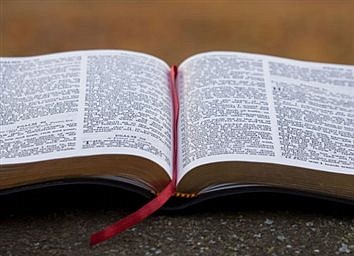
Who is the Kingdom of God?
The Kingdom of God, not a place or a concept, is, at its essence, Jesus Himself. It is already powerfully present in the world, breaking through the walls of sadness, sin and division. Yet, it is not complete. It is only going to be complete when, in Christ’s time, he will come again in glory and His kingdom will have no end. This eternal Word comes into the world and by His words and actions, He expresses the central message that He is in Himself and that He came to bring the Kingdom of God. Jesus is the preacher and that which is preached; He is the messenger and the message.
This Kingdom of God is more than simply an earthly dominion, but primarily a heavenly reign. We are acutely aware that it is the Lord’s initiative to bring the Kingdom to fruition in this world. Nothing that we can do can bring forth the Kingdom of God. However, we can cooperate with the will of God and thus, in our own way, bring God’s Kingdom to a gradual inbreaking, a forthcoming indwelling every single day.
We might expect Jesus to give us today a clear definition of the Kingdom of God. Nothing, however, can be further from the truth. Jesus never comes out in any of the Gospels with a direct statement of exactly what the Kingdom of God is or is not.
Jesus only speaks of the Kingdom of God in simile. Why would Jesus never speak directly as to the definition of the Kingdom of God? I suspect this is the case because the Kingdom of God is always more than we could ever ask for or imagine!
The only quasi-definition that we receive for the Kingdom of God comes not from any Gospel, but from St. Paul’s Letter to the Romans. In this incredibly important epistle, St. Paul gives us his basic theological perspective. In a much later part of the letter from what we read Sunday, Romans 14:17, we hear that “the Kingdom of God is not a matter of eating or drinking, but that of peace, justice and joy.” Notice that this “definition” does its function, by declaring what the Kingdom of God is not, rather than what it is.
By declaring the Kingdom of God to not be a matter of eating and drinking, what does St. Paul mean? He means that it is not a matter of the things of this world, but of the world to come. We might wish to perceive peace, justice and joy as the values of the Kingdom. So, with this in mind, are we good citizens of the Kingdom of God?
Do we live out these values of peace, justice and joy in our daily lives? Are we bearers of grudges against some in our lives? It is perhaps the most difficult thing that we might be called to do, but have we tried, in all the situations of our lives, to be instruments of the Lord’s peace?
Are we people of justice, true justice in the world? Remember, this means establishing true and real equity once again in the world, not revenge. To avenge means to attempt to get even. That is not justice, which is giving every person his or her due.
Are we people of joy? Remember that joy is always being happy. Being a person of joy is ultimately realizing the truth of the words of Saint Paul’s Letter to the Romans: “We know that all things work for good for those who love God, who are called according to His purpose.”
A basic definition of the Kingdom of God is: “God is powerfully reigning in our lives.” Please God, this is the case for all of us! May we permit His kingdom to come, His will to be done in our lives!
Father Cush is professor of dogmatic theology and director of Seminarian Admissions at Saint Joseph’s Seminary, Dunwoodie.
SOCIAL MEDIA
OSV NEWS
- Pew: Trump’s support among Catholic voters drops heading into midterms
- Cardinal Tagle reads Pope Leo’s homily to bishops: ‘The world has no future without strong families’
- ‘To see the face of God in wartime’: a Jesuit’s mission in Siberia
- Trump revives baseless claims about Haitian migrants in Ohio while touting deportations
- US bishops, lawmakers offer prayers for Pope Leo after cancer diagnosis
- Pope Leo XIV’s surgery reveals lung cancer
- What’s a lung nodule? As Pope Leo undergoes surgery, medical experts explain
- Prayers for pope ahead of surgery invoke Our Lady of Fatima on miracle of sun anniversary
- Pope Leo XIV admitted to hospital for afternoon lung surgery
- Beyond the celebration: Quinceañera formation nurtures faith and belonging
Comments:
You must login to comment.