


February 7, 2023 at 5:45 p.m.
The meaning of formation
The meaning of formation
Happily, God is a much finer potter of clay.
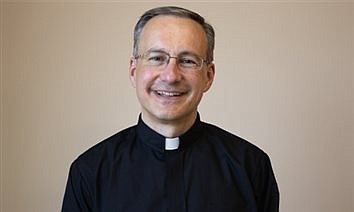
As a seminarian of the Diocese, I am in “formation” for the priesthood. “Formation” may sound like an unusual term to describe preparation for ministry, but in fact it points to a rich biblical image. It describes how the Lord shapes all of us as disciples.
The prophet Isaiah proclaims, “Lord, ... we are the clay and you are our potter: we are all the work of your hands” (Is. 64:7). The word “formation” captures the reality that we are like clay. We are “wonderfully made” with many gifts from the Lord (Ps. 139:14), but we all need to be shaped by the Lord, made better able to serve him. To be shaped by the potter, clay must be malleable. So too, while God wants to burnish our rough edges and increase our capacity, we must be willing and adaptable enough to allow God to shape us.
WHAT FORMATION LOOKS LIKE
Priestly formation entails not just academic studies, although that is an important part of it. It is really about allowing the Lord to shape all aspects of your life.
A seminarian’s typical day can illustrate. We start the day with private prayer and communal Morning Prayer. That is one part of our spiritual formation, growing closer in our relationship with the Lord. Then we head off to class, like the class on the parables of Jesus that I am now taking. That is part of our intellectual formation, growing in our understanding of the faith. Once a week, we head off to a pastoral assignment, which for me is a day at a local nursing home. That is part of our pastoral formation, growing in our capacity to offer service in ministry.
And throughout all of it, in the countless encounters, challenges and joys of the day, we find human formation. We grow as disciples of Christ.
To be “formed” means acknowledging our own weaknesses and turning them over to the Lord for healing. It means acknowledging that we are, in St. Paul’s words, “earthen vessels” (2 Cor. 4:7). Discovering this truth of priestly formation has been greatly consoling to me. To be a priest does not mean that we are free of weakness. To the contrary, it is through humbly acknowledging our weakness that we open ourselves to formation, allowing God to rework what needs fixing within us. When we do, we become a vessel of greater strength and capacity to serve Christ and his Church.
And the even greater truth is that God entrusts his ministry to such “earthen vessels.” Pope Benedict XVI, in his concluding homily for the Year of the Priest in 2009, cited this image in expressing gratitude to God “for the fact that he entrusts himself to our infirmities.” Through the priesthood, God offers “a gift concealed in ‘earthen vessels’ which ever anew, even amid human weakness, makes his love concretely present in the world.”
For a man discerning a vocation, the call may seem daunting, demanding beyond one’s capacity. Yet we can trust that we are in the hands of the master “potter” who will form us into the disciples he calls us to be.
Tom Fallati is a seminarian of the Diocese and a parishioner at St. Pius X Church in Loudonville. He is studying at Pope St. John XXIII Seminary in Weston, Mass.

SOCIAL MEDIA
OSV NEWS
- Full text: Pope Leo XIV’s Angelus address given October 18, 2026
- Pope Leo returns to Vatican window for Angelus saying prayers sustained him after cancer surgery
- Pope Leo XIV discharged from hospital early following lung cancer surgery
- Pope Leo XIV’s brother shares his own cancer battle, the role of faith and his 1 request
- Global progress must ‘truly serve the human person,’ nuncio tells major interfaith forum in Utah
- Archbishop Hicks hosts his first Al Smith dinner; NYPD commissioner, Cardinal Dolan honored
- Pope Leo sends message to San Francisco celebrating Franciscan mission’s 250th anniversary
- As pope faces cancer, biographers say it’s too early to predict changes to his papacy
- Temporary protections for Ukrainians in US set to expire, trigger deportation, archbishop says
- The courage to risk death for life
Comments:
You must login to comment.