


May 26, 2020 at 10:29 p.m.
Diocesan guidelines for drive-in Mass, drive-up Holy Communion
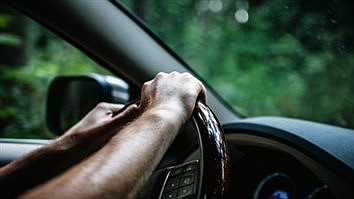
As the faithful await word on when public Masses can be celebrated, the Diocese of Albany has released a guide on how drive-in Masses or drive-up Holy Communion, while maintaining social distancing guidelines, can be celebrated. These are some of the highlights:
Where it is possible to celebrate Mass outside (for example in a parking lot, church grounds, or on the church steps) local authorities and law enforcement agencies MUST be consulted well before arrangements are made for the Mass to make sure of any local restrictions or bylaws.
Wherever possible, those present at the Mass should be able to participate without the use of cell phones. The Mass may still be livestreamed or recorded. An adequate PA system needs to be in place in order for the congregants to hear, and a dais or platform should be set up for the altar, so that congregants may see the celebration of the Mass.
A table with an open corporal and a hand sanitizer should be in place at the point where Holy Communion is to be given. As the Mass is being celebrated outside, care should be taken that the vessels to be used to hold the elements for Holy Communion can be covered. Arrangements need to be in place in case of an overflow of numbers that exceeds the capacity of the parking lot.
Ushers or stewards will need extra training so that they can perform their duties. These duties would include: Supervising and directing the arrival of vehicles, parking and an orderly exit at the conclusion of the Mass; as well as supervising and directing people when they leave and then return to their cars as they come forward to receive Holy Communion.
In cases where the faithful are in their cars (either for a drive-in Mass or drive-up distribution of Holy Communion), the communicants should get out of their cars to receive, one car at a time.
This is preferable from a public health perspective, because it permits the priest (wearing a mask but not gloves) to stand next to a hand sanitizing station and thus gives him the ability to sanitize his hands after each Holy Communion, if necessary. If the priest walks from car to car or from window to window, this hand hygiene would be difficult. It is also preferable from a sacramental perspective, because it removes the temptation to pass the Eucharist from person to person in the car, if a passenger is not near an open window, and eliminates the problem of self-communication.
In addition, distribution of the Eucharist in another vessel or container (a plastic bag, paper cup, or a metal pyx) is not warranted from a public health perspective and may even increase risk.
In principle, there should be no public health objection to having people exit their cars, one car at a time (perhaps guided by an usher to direct traffic). This would not constitute a large gathering.


- Canadian bishops at plenary hear presentations about progress on creating a ‘listening’ Church
- Federal agency sues Ohio-based Catholic health system over alleged antisemitism
- Pope Leo urges Europe to stave off increased nationalism, barbaric relations
- Notre Dame consecrated to the Sacred Heart for first time thanks to student-led initiative
- Pope Leo XIV says he’s not losing sleep over AI apocalypse fears
- McElroy: Americans can no longer ‘pass on by’ ignoring how US is treating immigrants
- Bernadette Soubirous is a saint — but not because Mary appeared to her at Lourdes
- Wrapping up France visit, Pope Leo calls on Europe to choose reconciliation over division
- Evangelization Lab helps churches bring digital travelers to the Catholic faith
- Polish priest wounded in stabbing returns to altar with message of forgiveness
Comments:
You must login to comment.