


April 1, 2020 at 5:43 p.m.
No cellphones to administer reconciliation
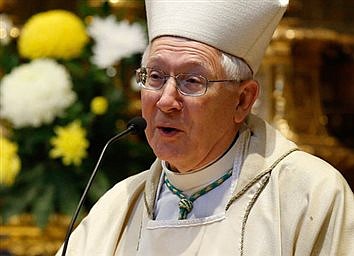
WASHINGTON (CNS) -- Administering the sacrament of reconciliation via cellphone is impermissible under Church teaching, said the chairman of the U.S. bishops' Committee on Divine Worship.
In a March 27 memo to his fellow bishops, Archbishop Leonard P. Blair of Hartford, Connecticut, said he was informed by Archbishop Arthur Roche, secretary of the Congregation for Divine Worship at the Vatican, that using a cellphone for the sacrament poses a threat against the seal of confession.
Even the use of a cellphone to help amplify the voices of a confessor and penitent who can see each other is not allowed, the memo said.
Archbishop Blair also said in the memo that in regard to anointing of the sick, the duty cannot be delegated to someone else, such as a doctor or nurse.
Citing the Catechism of the Catholic Church, Archbishop Blair noted, however, that when it is not possible for a priest to administer the sacrament of reconciliation, it is appropriate for a someone to seek absolution from sin by offering a "perfect contrition, coming from the love of God."
Such contrition, the catechism continues, "expressed by a sincere request for forgiveness ... and accompanied by 'votum confessionis', that is, by the firm resolution to have recourse, as soon as possible, to sacramental confession, obtains forgiveness of sins, even mortal ones."
Archbishop Blair wrote that the same standard can be applied to the sacrament of the sick.
Questions about such practices arose in response to recent circumstances stemming from the widening transmission of coronavirus.
In the Archdiocese of Portland, Ore., a priest prohibited from visiting patients hospitalized in isolation made telephone contact with a hospitalized COVID-19 patient who was on a ventilator and whose family had asked the cleric to administer last rites. The priest led the patient through the process of an act of contrition and a prayer for forgiveness.
Elsewhere, Bishop Mitchell T. Rozanski of Springfield, Mass., March 25 allowed nurses to administer holy oil to seriously ill patients as long as an assigned Catholic hospital chaplain was standing away from the bed or outside a patient's room. The policy allowed chaplains to offer prayer via cellphone to patients who were alert.
Bishop Rozanski reversed his decision March 27 and told priests he had suspended the sacrament of the sick throughout the diocese.

- Jordan reels after terrorist attack on church, King vows ‘harshest retaliation’
- Scandinavian Catholics debate how to handle new wave of conversions
- Our Lady of Guadalupe apparitions are ‘true origin story’ for US, the Americas, LA archbishop says
- Why do some priests leave ministry? New study aims to find out
- Court allows multifaith challenge of Trump administration policy to permit ICE arrests at churches
- Pope Leo urges Catholic schools to be aware of ‘digital loneliness’ and ‘misguided meritocracy’
- Catholic sister challenges JD Vance over ICE tactics, treatment of immigrants
- Blaming Autumn: Unjust cranks in this excellent season of wonder
- Trump holds Oval Office meeting with some US bishops shortly before midterms
- Savannah bishop shares timeless witness of Georgia Martyrs ahead of beatification
Comments:
You must login to comment.