


April 6, 2018 at 1:53 p.m.
WORD OF FAITH
Covenant and blood
When did you last hear a homily encouraging you to receive from the Eucharistic cup? In the past, the cup was so de-emphasized that we old-timers remember when the feast of the Body and Blood of Christ was simply called “Corpus Christi:” The Body of Christ. Only After Vatican II in the 1960s was the blood of Christ added to the title.
Though communion under both species has been “permitted” in the American Church for almost 25 years, large numbers of the faithful still seem to think that receiving the blood of Jesus is for “extra credit.”
Since they’ve already been given a passing grade for receiving the body of Christ, the don’t want to risk picking up a few stray germs by also receiving from the cup. And most of us homilists do little to encourage them to start the practice.
Losing the cup
Mark and the author of the Letter to the Hebrews would never have understood our reluctance to carry out Jesus’ Last Supper command to drink from the cup. Everyone in the early Christian community did so.
Yet, Church historians tell us that this action eventually became problematic. When everyone received the cup, the Eucharist took longer to celebrate, was more complicated and expensive, and you frequently had to deal with misguided individuals who “chug-a-lugged” the whole cup. It was easier, more comfortable and controllable just to stick to the bread.
Scripture scholars also add that the withdrawal of the cup coincided with the withdrawal of the Hebrew Scriptures from the Church’s liturgy and life. When we started to read the Christian Scriptures independent of the Hebrew Scriptures, we lost the biblical basis for receiving the blood of Christ.
In the Hebrew Scriptures, blood always symbolizes life. Everyone realized if you took all the blood out of the living creature, it died. That’s why they made blood an integral part of covenant-making ceremonies. It was an outward sign of the participants’ hope that this agreement eventually would provide a better quality of life then they had before.
We see this belief graphically portrayed in the first reading (Ex 24: 3-8). Moses commands that the blood shed during the Sinai covenant be divided into two parts: half splashed on the altar, half splashed on the people. Since the altar symbolizes Yahweh’s presence, all the covenant-makers now have blood splattered on them. It’s both an outward sign they’ve made the covenant and a sign they’ll benefit from the life the covenant offers.
Covenant
Jesus’ first followers also rooted their faith in the dual concepts of covenant and blood. Yet, as the author of Hebrews reminds us, for them it was now a new covenant, one which Jesus entered into with God and us and no longer was the sign of life “the blood of goats and bulls.” It was the “blood of Christ, who through the eternal Spirit offered Himself unblemished to God” (Heb 9: 11-15).
(06-19-03)
[[In-content Ad]]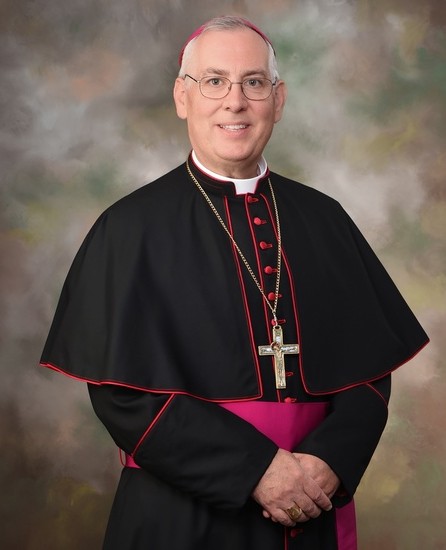


- Canadian bishops at plenary hear presentations about progress on creating a ‘listening’ Church
- Federal agency sues Ohio-based Catholic health system over alleged antisemitism
- Pope Leo urges Europe to stave off increased nationalism, barbaric relations
- Notre Dame consecrated to the Sacred Heart for first time thanks to student-led initiative
- Pope Leo XIV says he’s not losing sleep over AI apocalypse fears
- McElroy: Americans can no longer ‘pass on by’ ignoring how US is treating immigrants
- Bernadette Soubirous is a saint — but not because Mary appeared to her at Lourdes
- Wrapping up France visit, Pope Leo calls on Europe to choose reconciliation over division
- Evangelization Lab helps churches bring digital travelers to the Catholic faith
- Polish priest wounded in stabbing returns to altar with message of forgiveness
Comments:
You must login to comment.