


April 6, 2018 at 1:53 p.m.
REFLECTION
A real wedding gift: oneself
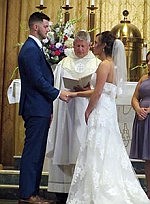
A real wedding gift: oneself
Her lack of emotion disturbed the sensitive writer, a deeply compassionate man. One day, he was inspired to bring her a rose. At the moment he handed her the flower, he was a witness to a remarkable transformation: Her weatherbeaten face suddenly glowed.
He saw, for the first time, that she did have feelings. She smiled - and, for a week, she was no longer seen begging on the street. Someone -- a stranger, no less -- had given her more than money. Someone had, perhaps for the first time, captured her heart!
The poet unknowingly saw her as Christ sees her: as a woman of infinite value, worthy of a sublime act of love and affection. Rilke's story casts a gentle light on the mystery of human love and, surprisingly, the beauty of Christian marriage.
As we reflect on the dignity of marriage, we must admit that few things are as satisfying as seeing how a simple act of giving can bring joy and renewed purpose to the beneficiaries of our kindness and thoughtfulness. A person is giving most to another when he gives of himself: that is to say, gives the most precious thing he possesses, his own life. One of the great paradoxes of the Christian faith is revealed by our Lord: "Anyone who wants to save his life will lose it" (Mt 16:25).
If the institution of marriage suffers today, it is because too few are willing to make that praiseworthy gift of self to the other in imitation of Jesus Christ, who offered His life on the cross and who stooped down to wash the feet of His disciples on eve of His death.
For many married couples in the twilight of life, great sacrifices are demanded of them as they see their loved one enfeebled by age or beset by illness. The "gift" they make of themselves is of infinite value and appreciated even more than on their wedding day.
In his apostolic letter "Amoris Laetitia" ("The Joy of Love"), Pope Francis writes of the wisdom of seeing others from a supernatural perspective. He states: "It is a profound spiritual experience to contemplate our loved ones with the eyes of God and to see Christ in them. This demands a freedom and an openness which enable us to see their dignity. We can be fully present to others only by giving of ourselves and forgetting all else."
In the Broadway musical "Man of La Mancha," the hero, Don Quixote, is portrayed as a simpleton, but one whose heart is pure. He meets a prostitute named Aldonza and sees in this woman what no one else sees. He calls her "Dulcinea."
In the song bearing her new name, Don Quixote sings, "I have dreamed thee too long -- never seen or touched thee, but known thee with all of my heart. Half a prayer, half a song. Thou has always been with me. Dulcinea, Dulcinea, I see heaven when I see thee and thy name is like a prayer an angel whispers, 'Dulcinea, Dulcinea.'"
It is, of course, unrealistic to expect a couple married 40 or 50 years to see in each other the face of heaven. But if, in their more reflective moments, they consider the gift they made to each on the day of their wedding, they may come to the shocking realization that they assumed a new identity upon reciting their baptismal promises. They became Christ for each other.
(Father Yanas is pastor of Sacred Heart parish in Troy.)[[In-content Ad]]


SOCIAL MEDIA
OSV NEWS
- Vermont diocese seeks to withdraw bankruptcy filing, citing legal costs, lack of progress
- Washington Letter: Trump pushes ahead on AI in face of ongoing concerns from Pope Leo, voters
- Pope writes to Gaza priest after strike kills 5, including Christian mother, daughter
- Full text: Pope Leo XIV’s Angelus address given October 4, 2026
- Pope moves St. Peter’s archpriest to Italian diocese without naming successor
- 800 years after St. Francis’ death, Franciscans to mark his ‘Transitus’ — so what is it?
- Relevant Radio’s ‘Father Rocky’ named new director of Our Lady of Champion shrine
- Vatican meeting on ‘Amoris Laetitia’ to focus on listening, not past debates, officials say
- The work of St. Francis in the vineyard
- The story of Jesus brings us together
Comments:
You must login to comment.